
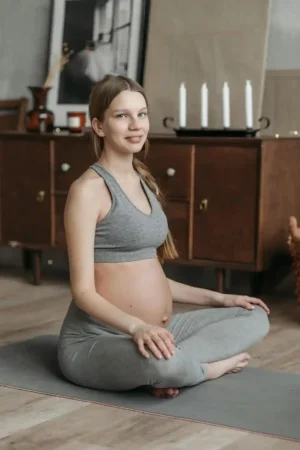
Confession : in my second trimester, I had two constant companions—bloat and balloon-ankles. I tried to “walk it off,” then sat down and felt puffy again. Sound familiar? If alleviating constipation and swelling exercises for pregnancy are on your mind because your jeans feel tight by noon and your socks leave little ankle rings—I’ve been there, too.
Here’s the good news: you don’t need an hour-long workout or a fancy studio. Gentle, targeted movement (plus a few posture tweaks) can nudge digestion along and help fluid move out of your feet and hands. Think short walks, easy yoga flows, ankle pumps while you watch a show, and a couple of core-smart moves that support your belly without strain. In this guide, I’ll show you exactly what to do, why it works, and how to keep it safe—so you can feel lighter, sleep better, and get through the day with less “oof.”
Quick note : Always check with your ob-gyn or midwife before starting or changing exercise in pregnancy. If anything causes pain, dizziness, or shortness of breath, stop and call your provider. Guidance for most healthy pregnancies supports moderate activity with simple modifications.
In this article : [+]
Why movement helps (in mom-friendly terms)
- Constipation : Walking and gentle core-smart mobility stimulate gut motility (the wave-like movement that helps “things” move along). Fiber, fluids, and movement are the classic trio your provider will mention—and exercise is the piece we’ll nail here.
- Swelling (edema) : Baby shifts blood volume and fluid balance, so ankles/feet/hands often puff. Foot and ankle exercises act like a mini pump, and short walks improve circulation. Elevating your legs periodically also helps fluid drain.
- Bonus benefits : Regular prenatal activity (even broken into tiny sessions) is encouraged—aim toward ~150 minutes/week at a “talk-test” pace (you can chat, singing is tough). Every 10 minutes counts.
10 gentle, targeted moves (with how-to and mom notes)
Start with 5–10 minutes. Move slowly, breathe steadily, and use the talk test to keep intensity comfortable.
1) Two-Song Walk (digestion boost)
How : Walk at an easy-brisk pace for the length of two favorite songs (about 6–8 minutes).
Why : Rhythmic walking stimulates your digestive tract and eases bloat without strain.
Mom note : On sluggish mornings, this mini walk was my secret “go” button.
2) Cat–Cow + Belly Breath (gut massage)
How : On hands and knees, inhale as your belly softens (cow), exhale as you round gently (cat). Add slow nasal inhales and long, relaxed exhales.
Why : The gentle spinal wave and diaphragmatic breathing massage abdominal organs and calm tension—great for constipation discomfort.
3) Seated “Side-Body Sways” (space for the bump)
How : Sit tall (chair or edge of bed). Reach one arm up; gently side-bend away from your bump; breathe. Switch sides.
Why : Opens the ribs and upper abdomen so your breath can travel deeper—helpful for both digestion and overall comfort.
4) Supported Squat (toilet-stool practice)
How : Stand in front of a chair, feet wider than hips, toes slightly turned out. Hold the back of the chair and sit your hips back, then exhale to stand.
Why : Opens the pelvic floor and hips—useful practice for bathroom posture (a footstool on the toilet mimics a gentle squat).
Mom note : I keep a small stool in the bathroom. Not cute… incredibly effective.
5) “Happy Gut” Seated Twist (gentle, away from the bump)
How : Sit tall. Place left hand on right thigh; gently rotate your rib cage away from your belly (small range). Breathe. Switch sides.
Why : Very gentle twisting can encourage motility—keep it subtle and comfy. (Skip deep or compressive twists.)
6) Ankle Pumps (the edema classic)
How : Sitting or lying on your side, flex and point each foot 30 times.
Why : Calf muscle action is a natural pump that improves circulation and helps reduce swelling.
7) Ankle Circles (fluid mover)
How : Draw slow circles with your toes—8 one way, 8 the other, each foot.
Why : Moves lymph and venous blood from your lower legs, easing puffiness.
Mom note : I do these under the table during emails—no one knows, my ankles approve.
8) Birth-Ball Hip Tilts (lower-belly ease)
How : Sit on a stability (birth) ball with feet planted. Gently tilt pelvis forward/back, then make small circles in each direction.
Why : Mobilizes the pelvis without strain; many moms find it soothing for gas/bloat and low-back stiffness.
9) Low Lunge (hip flexor release)
How : Back knee on a cushion, front knee over ankle. Pelvis neutral (no big backbend). Breathe 3–5 slow breaths, switch sides.
Why : Sitting a lot can tighten hip flexors, which can contribute to back discomfort and sluggish gut mechanics.
10) “Feet-Up” Break (elevate, not flat-on-back)
How : A few times a day, sit or lie on your side and elevate calves/feet on pillows so they’re above your hips; relax 5–10 minutes.
Why : Uses gravity to reduce swelling without lying flat on your back for long (which isn’t ideal later in pregnancy).
Mom note: Afternoon tea + feet on pillows = my anti-cankle ritual.
A cozy 7-day plan (mix & match, 10–25 minutes)
Adjust minutes to your energy. If you only do the first block, that’s a win.
Day 1 – Gut-Gentle Flow (15–20 min)
Two-Song Walk → Cat–Cow × 8 slow rounds → Supported Squat 2×8 → Seated “Side-Body Sways”
Day 2 – Foot & Ankle Reset (10–15 min)
Ankle Pumps × 30/foot → Ankle Circles 2×8 each way → Feet-Up Break (5–10 min)
Day 3 – Walk & Breathe (15–25 min)
Talk-test walk (add a tiny hill if comfy) → Birth-Ball Hip Tilts (2 minutes)
Day 4 – Yoga Mini (15–20 min)
Cat–Cow × 8 → Low Lunge (3–5 breaths/side) → Gentle Seated Twist (away from bump) → Feet-Up Break
Day 5 – Strength-Lite (15–20 min)
Supported Squat 2×8 → Counter Pushups 2×6–10 → Side-Lying Clamshells 2×10/side → Ankle Pumps × 30
Day 6 – Pool Day or Mall Walk (15–25 min)
Water walking or cool indoor walk → Ankle Circles 2×8 each way
Day 7 – Restore (10–15 min)
Side-lying rest with pillows, slow belly breaths → Feet-Up Break
Why this works : short bouts add up toward that ~150 minutes/week goal most guidelines encourage, while foot/ankle moves and elevation directly target swelling.
Bathroom posture & daily habits that help
- Footstool on the toilet : Elevate feet to mimic a gentle squat; don’t strain—give yourself time.
- Hydrate & fiber : Pair movement with water and fiber-rich foods (aim ~25 g/day; think oats, beans, berries).
- Mini movement breaks : Every hour, stand, do 10 ankle pumps, and take a slow hallway stroll.
- Left-side rest : Resting on your left side can improve venous return; prop legs with pillows when you can.
- Shoes matter : Wear wide, supportive flats to help alignment and reduce swelling pressure.
Safety refresh (so you feel confident)
- Intensity : Use the talk test—you can chat in full sentences; singing is tough. Short bouts count.
- Positions : In the second and third trimesters, avoid long periods flat on your back; choose side-lying, seated, standing, or inclined options.
- Cooling & hydration : Choose cooler rooms, sip water before/during/after, and take breaks if you feel too warm.
- Red flags—stop and call your provider : vaginal bleeding or a gush of fluid, regular/painful contractions, chest pain, dizziness/faintness, severe headache, shortness of breath before exertion, calf pain/swelling, sudden weakness, or noticeably decreased fetal movement. (Standard patient guidance.)
Expert insight (trust-builders, no jargon)
- “How much should I move?” Health guidance encourages ~150 minutes/week of moderate activity during pregnancy. Break it into 10-minute chunks—every little bit counts.
- “What really helps swelling?” NHS advice includes foot exercises (ankle pumps/circles) and raising your legs on a chair or pillows when you can.
- “Constipation still rough?” Lifestyle (fiber, fluids, movement) usually comes first; your provider may discuss pregnancy-safe stool softeners if needed. Don’t self-medicate—ask.
Real-life Q&A (you asked!)
Many moms feel a difference in a few days of consistent mini-sessions—less ankle puff, easier bathroom trips. Keep it gentle and steady.
Choose very gentle, seated twists and rotate away from your bump, staying in a small range. If anything feels compressive or uncomfortable, skip and stick with Cat–Cow.
Later in pregnancy, avoid long, flat-on-your-back poses. Instead, try side-lying with pillows or seated leg elevation so you get the benefits without vena cava compression.
Do ankle pumps and a 5-minute stroll. That’s still a win—your body counts every minute.
Wrapping Up with Love & Support
Mama, you’re carrying a lot—literally and emotionally. Relief doesn’t have to be complicated. It can be two songs of walking, a few ankle circles under the table, and five quiet breaths on your left side with your feet propped up. Tiny, kind choices—done most days—add up to lighter legs, calmer digestion, and a little more ease in your body. Celebrate the small wins, forgive the hard days, and remember: progress beats perfection every time. You’ve got this. 💛
What mini-move helped you most today—ankle pumps, Cat–Cow, or that two-song walk? Share it in the comments so another mama can try it tonight.
Want printable checklists and a week-by-week plan? Join the Cozy Life Mom email list and I’ll send you my “Bloat & Swell Relief Starter Kit” straight to your inbox.
Educational only; not medical advice. Always follow your own provider’s guidance for your unique pregnancy.