
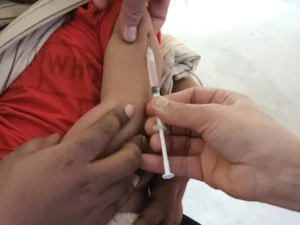
I remember sitting in the pediatrician’s office, bouncing my baby on my knee, staring at a colorful chart on the wall labeled Child Immunization Schedule… and feeling my brain quietly short-circuit.
Names I couldn’t pronounce.
Acronyms everywhere.
Multiple vaccines at the same visit.
Meanwhile, my baby was chewing on the corner of her vaccination card like this was all no big deal, and I was trying not to cry before she even got the shot.
I had so many questions swirling in my head :
- “Why are there so many ?”
- “What happens if we miss one ?”
- “How am I supposed to remember all of this ?”
If you’ve ever felt confused, anxious, or just plain overwhelmed by the vaccine schedule, you are so not alone. I’ve been there too, mama. 💛
The good news is : the Child Immunization Schedule is basically a roadmap created by experts to protect your child from serious diseases, at the ages when the protection will help them most. You don’t have to memorize every detail—that’s what your pediatrician (and their computer) is for. But having a simple, mom-friendly overview can make everything feel a lot less scary.
In this post, we’ll walk through :
- What the schedule actually is (in plain English)
- A simple age-by-age breakdown
- What to do if your child misses a shot
- How to prepare for vaccine appointments
- Reassuring reminders about safety and support
Let’s turn that confusing wall chart into something that feels more like a plan—and less like a panic trigger.
In this article : [+]
1. What Is the Child Immunization Schedule?
The Child Immunization Schedule is a recommended timeline for when children should receive vaccines from birth through adolescence. In the U.S., it’s developed by major health experts like the Centers for Disease Control and Prevention (CDC), the American Academy of Pediatrics (AAP), and others.
Think of it as :
A roadmap, not a rigid exam you can “fail.”
The schedule :
- Helps protect babies and kids as early as possible from serious diseases (like measles, whooping cough, polio, meningitis).
- Takes into account how your child’s immune system develops.
- Includes booster doses when extra protection is needed.
You don’t have to remember every vaccine name or acronym (MMR, DTaP, PCV… all the alphabet soup). What matters most is :
- Showing up for well-child visits
- Asking questions when you’re unsure
- Working with your pediatrician on any catch-up plan if needed
2. Overview of the Child Immunization Schedule (Birth–Teen)
This is a simplified overview based on the CDC’s routine schedule for healthy children. Your pediatrician will always have the most current and detailed version and may adjust it slightly based on your child’s health or local recommendations.
Always double-check specifics with your child’s doctor or official CDC/AAP materials.
At Birth
- Hepatitis B (HepB) – 1st dose
Protects against a serious liver infection.
2 Months
Usually the first “big” shot day :
- DTaP – Diphtheria, Tetanus, Pertussis (whooping cough)
- Hib – Haemophilus influenzae type b (a cause of meningitis)
- PCV – Pneumococcal conjugate (infection that can cause pneumonia, meningitis)
- IPV – Inactivated Polio Vaccine
- Rotavirus (RV) – given by mouth (helps protect against severe diarrhea)
4 Months
Most of the same vaccines as 2 months, as second doses :
- 2nd doses of: DTaP, Hib, PCV, IPV, Rotavirus
6 Months
- 3rd doses of: DTaP, PCV, sometimes Hib (depends on brand)
- IPV may be given anytime 6–18 months
- Flu vaccine: first dose can be given starting at 6 months, then every year during flu season
12–15 Months
- MMR – Measles, Mumps, Rubella
- Varicella – Chickenpox
- Booster doses of Hib and PCV
- Often additional doses of HepB or IPV as needed
12–23 Months
- Hepatitis A (HepA) – usually 2-dose series given at least 6 months apart
4–6 Years
“Big kid” booster visit :
- DTaP booster
- IPV booster (polio)
- MMR – 2nd dose
- Varicella – 2nd dose
11–12 Years
Pre-teen boost and additional protection :
- Tdap – booster for tetanus, diphtheria, and pertussis
- HPV – human papillomavirus vaccine (helps prevent certain cancers later in life; series typically starts at 11–12 years old)
- Meningococcal conjugate (MenACWY) – protects against certain types of meningitis
16 Years (and beyond teen years)
- Booster dose of MenACWY often recommended around age 16
- In some cases, MenB (another meningitis vaccine) may be recommended based on risk factors
Again : this is a simplified guide. Always follow your country’s official schedule and talk to your pediatrician about your specific child.
3. “What If We’re Late?” – Catch-Up and Missed Shots
Here’s something reassuring :
If your child misses a vaccine, in most cases you do not have to start over.
The CDC and AAP have detailed catch-up schedules that tell doctors how to safely “pick up where you left off” if a dose was delayed.HealthyChildren.org+1
What you can do :
- If you realize you’re behind, call your pediatrician’s office and say something like: “We missed the last well visit and I’m worried we’re off track with the Child Immunization Schedule. Can we schedule an appointment and do a catch-up plan?”
- Bring your child’s vaccination card or app so they can see exactly what’s been done.
Life happens—illness, travel, newborn chaos. Doctors know this. The important part is getting back on track, not feeling guilty.
4. How to Read All Those Vaccine Names Without Panicking
All those letters can feel like another language. A simple way to think about them :
- HepB / HepA – Hepatitis (liver infections)
- DTaP / Tdap – Diphtheria, Tetanus, Pertussis (whooping cough)
- Hib – Meningitis and serious bacterial infection
- PCV – Pneumococcal disease (pneumonia, meningitis, blood infections)
- IPV – Polio
- MMR – Measles, Mumps, Rubella
- Varicella – Chickenpox
- HPV – Human Papillomavirus (linked with several cancers)
- MenACWY / MenB – Meningococcal disease (a form of meningitis)
You don’t have to remember all of this word-for-word. It can just help to know that each shot has a purpose: protecting your child from a specific serious illness.
Many pediatricians also give out Vaccine Information Statements (VIS) that explain each vaccine, what it protects against, and common side effects in plain language.
5. Practical Tips for Surviving Vaccine Days (For You and Baby)
Vaccine appointments can be emotional—for your child and for you. Here are some things that helped me :
1. Bring comfort items
- Favorite blanket
- Stuffed animal or small toy
- Pacifier or comfort object
Babies can often nurse or bottle-feed during or right after shots, which can soothe them.
2. Use distraction
- Sing a song
- Play a quick video or show on your phone for older toddlers
- Let them blow bubbles or a pinwheel to “blow the ouch away”
3. Hold your child close
If the office allows it, holding your child in your lap during the shot can make them feel more secure. Many clinics encourage this for young children.
4. Plan for post-appointment downtime
After vaccines, kids might be :
- Sleepier than usual
- A bit fussy
- Slightly warm or have a mild sore arm
Your pediatrician may discuss ways to keep your child comfortable, like cool compresses or pain relief only if recommended and dosed correctly. Always ask before giving any medication.
5. Take care of your feelings too
It’s completely normal to feel anxious or even teary. I’ve cried in the car after shots more than once. It doesn’t mean you’re unsure—it means you care deeply.
6. Common Concerns Parents Have (And What Experts Say)
Most parents have at least one moment of “Is this safe?” or “Is this too many shots at once?”
Major health organizations like the CDC, AAP, and WHO emphasize that :
- The recommended vaccines are thoroughly tested for safety and effectiveness.
- Giving multiple vaccines at the same visit has been studied and shown to be safe; it also means fewer visits and earlier protection.
- Side effects are usually mild and temporary (like soreness, low fever, fussiness). Serious side effects are rare, but your pediatrician will explain what to watch for and when to call.
If you’re feeling unsure, it’s okay—actually healthy—to ask questions like :
- “Can you walk me through what they’re getting today?”
- “What are the most common side effects after these shots?”
- “Is there anything specific I should watch for tonight?”
A good pediatrician will welcome your questions and help you feel informed, not dismissed.
7. Easy Ways to Stay Organized and On Track
You already have 10,000 things in your brain. Let’s not add “remember every vaccine detail” to that list.
Here are a few systems you can use :
1. Use your child’s vaccination card
- Keep it in a safe, easy-to-grab spot (we keep ours in a folder with birth certificate and health papers).
- Bring it to every well-child visit.
2. Ask for a printed schedule or summary
Many clinics can print out a personalized vaccine summary for your child. You can keep it on the fridge or in your planner.
3. Use trusted digital tools
- The CDC offers parent-friendly schedules and a Vaccine Schedules app that lets you quickly check what’s typically due at each age.
- Some practices also have online portals that show vaccine history.
4. Set calendar reminders
- Add your next well-child visit and write “possibly shots” in the notes so you’re mentally prepared.
- For older kids (like pre-teens needing Tdap, HPV, and meningococcal vaccines), reminders can be really helpful.
8. What If You’re Still Unsure or Overwhelmed?
That’s okay. Really.
If you’re feeling tangled up in information, you can:
- Bring a written list of your top 3 questions to your next appointment.
- Ask your pediatrician to explain the risks of not vaccinating on time as well as the benefits of following the schedule.
- Request reputable resources (CDC, AAP, your local health department) instead of random internet links.
Avoiding information doesn’t usually make the anxiety go away—but getting clear, science-backed answers from someone you trust can help a lot.
You’re Doing the Best You Can, Mama (Encouragement & Support)
If the Child Immunization Schedule feels like one more overwhelming thing in a long list of “things I can’t mess up”… I see you.
Here’s what I want you to remember :
- You don’t have to memorize every vaccine or date.
- You’re allowed to ask questions—even if you feel like you “should” already know.
- Showing up, talking to your pediatrician, and doing your best to stay on schedule is already a huge win.
Every appointment, every little round Band-Aid on a tiny thigh, every snuggle afterward—it’s all part of building a shield of protection around your child, even if they’ll never remember it.
You are not alone in this. You are not expected to be perfect. And you are a good mom, doing something important and sometimes hard to keep your child safe.
You’ve got this. 💛
Let’s Chat, Mama
I’d love to hear from you :
👉 What’s one question or worry you’ve had about the Child Immunization Schedule—or one tip that helped you feel calmer on shot days?
Share it in the comments—your experience might make another mama feel a little less alone.
If this post helped you understand the Child Immunization Schedule in a clearer, calmer way, feel free to save it, share it with a friend, or bring it along to your next pediatrician visit.
And if you’d like more warm, judgment-free support on baby health, development, and mom life, you’re always welcome to join my email list for weekly encouragement and practical, real-life tips. 💌