
As an Amazon Associate, I earn from qualifying purchases.
Some links on this page are affiliate links, meaning we may earn a commission if you choose to make a purchase.
I still remember the first time I really felt The Power of Reading Aloud with my child.
It wasn’t some perfectly curated Instagram moment. I was in my old pajamas, the living room was a mess, and we were both a little cranky after a long day. I grabbed a board book mostly to survive that last stretch before bedtime.
Halfway through, something shifted.
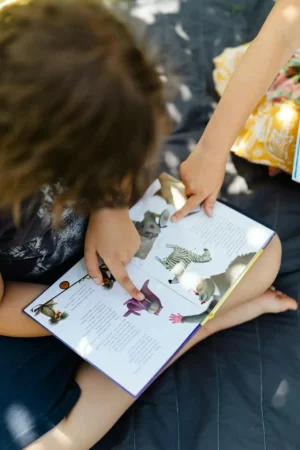
My toddler, who had been bouncing from toy to toy all afternoon, suddenly went quiet. Their little hand rested on my arm, eyes fixed on the pictures. I could feel their body relax against me as I read the same silly line for the third time. And then came the sweetest thing: they tried to “read” it back to me in their own baby words.
In that moment, I realized reading aloud isn’t just about books. It’s about connection. It’s about language, imagination, and carving out a tiny pocket of calm in a chaotic day.
If you’ve ever wondered whether these everyday story times really matter—or felt unsure which books to pick at each age—you’re not alone. I’ve been there, too.
In this post, we’ll walk through :
- Why reading aloud is such a powerful tool for your child’s development
- How to make it work in real life (even when you’re exhausted)
- Age-by-age book ideas so you’re not standing lost in the library wondering what to choose
Let’s make reading aloud feel simple, cozy, and doable—no perfect mom energy required. 💛
In this article : [+]
1. Why Reading Aloud Matters So Much
Before we dive into book lists, it helps to know why this routine is worth protecting, even on the wild days.
Reading aloud :
- Builds vocabulary and language skills
Your child hears words they’d never hear in normal conversation—“caterpillar,” “enormous,” “whispered,” “suddenly.” These little word seeds add up over time. - Boosts attention span and listening skills
Even just a few minutes of listening to a story trains the brain to focus, follow a sequence, and remember what happened first, next, and last. - Strengthens your bond
That snuggled-up, one-on-one time tells your child: “You matter. I like being with you.” Honestly, that might be the most powerful part. - Supports emotional development
Stories help kids name feelings—fear, excitement, jealousy, pride—and see characters working through them. It’s like emotional practice in a safe space. - Encourages a lifelong love of reading
When reading is associated with warmth, connection, and fun (not just school or homework), kids are far more likely to enjoy reading later on.
You don’t need to read for an hour a day or sound like a professional storyteller. Even 10–15 minutes of reading aloud, most days, can make a real difference.
2. How Often Should You Read Aloud? (Spoiler : Whatever You Can Is Enough)
Ideally, we’d all read every day. Realistically… life happens.
Here’s a simple way to think about it :
- Babies & toddlers : Aim for short, frequent moments—2–3 mini sessions of 5–10 minutes.
- Preschoolers & early elementary : One longer story session (10–20 minutes) plus little stories sprinkled in (bedtime, after snack, quiet time).
- Older kids : Chapter books read aloud in the evening, even if they can read on their own.
Some easy “anchor points” for reading aloud :
- After breakfast (one quick board book)
- Before nap or quiet time
- While you’re waiting—for dinner to cook, at the doctor’s office, in the car (audiobooks!)
- Bedtime (the classic, for a reason)
You can start with what feels realistic for this season. If that’s one book at bedtime, that counts. Truly.
3. Reading Aloud to Babies & Toddlers (0–3 Years)
At this age, your baby is not critiquing the plot. 😄
They’re soaking in :
- Your voice and tone
- The rhythm of language
- The connection between pictures and words
- The calm, cozy feeling of being close to you
Don’t worry if your toddler wiggles, chews the book, or walks around the room while you read. They’re still listening.
What to Look For in Books (0–3 Years)
- Bright, simple pictures
- Repetitive or rhyming text
- Short phrases or sentences
- Interactive elements (lift-the-flap, touch-and-feel, sounds)
Book Ideas for Babies & Toddlers
You don’t need these exact titles—but here are some great examples :
- “Goodnight Moon” by Margaret Wise Brown
A soothing bedtime classic with gentle, repetitive language that’s perfect for winding down. - “The Very Hungry Caterpillar” by Eric Carle
Colorful illustrations, counting, days of the week—so many little learning moments in one simple story. - “Brown Bear, Brown Bear, What Do You See?” by Bill Martin Jr.
Repetition makes it easy for toddlers to chime in. You’ll be surprised how quickly they memorize it. - “Moo, Baa, La La La!” by Sandra Boynton
Short, silly, and full of animal sounds—perfect for little ones learning to imitate sounds. - “Where’s Spot?” by Eric Hill
A lift-the-flap book that turns reading into a hide-and-seek game. - “Chicka Chicka Boom Boom” by Bill Martin Jr. & John Archambault
A fun, musical way to introduce letters.
Mom tip : Keep a small basket of board books near the diaper-changing area or in the kitchen so reading aloud can happen in tiny pockets throughout the day.
4. Reading Aloud to Preschoolers (3–5 Years)
Preschoolers are ready for :
- Slightly longer stories
- More complex plots
- Humor, repetition, and big feelings
You’ll start to notice them retelling stories, repeating lines, and asking more questions—this is all part of their language and thinking skills blossoming.
What to Look For in Books (3–5 Years)
- Stories about friendship, emotions, and everyday life
- Simple but engaging plots
- Rhymes and repeated phrases they can join in on
- Books that match their current interests (dinosaurs, trucks, animals, princesses, whatever their “thing” is right now)
Book Ideas for Preschoolers
- “The Gruffalo” by Julia Donaldson
Rhyming, funny, and a brave little mouse outsmarting a big monster—kids love this one. - “Don’t Let the Pigeon Drive the Bus!” by Mo Willems
Interactive and hilarious—your child gets to tell the pigeon “No!” over and over. - “Caps for Sale” by Esphyr Slobodkina
Repetition and a silly storyline that kids love acting out. - “Where the Wild Things Are” by Maurice Sendak
A beautiful story about big feelings and coming home. - “Dragons Love Tacos” by Adam Rubin
Ridiculous, funny, and perfect for kids who love dragons (or tacos… or both).
Mom tip : Preschoolers often want the same book 100 times. It’s okay to feel tired of it—but that repetition is actually great for their language and memory.
5. Reading Aloud to Early Elementary Kids (5–8 Years)
Even when kids start reading on their own, reading aloud is still incredibly helpful.
At this age, they’re learning to decode words, but their understanding is often much higher than their reading level. Reading aloud lets you introduce richer vocabulary and more complex stories than they could tackle alone.
What to Look For (5–8 Years)
- Early chapter books with short chapters
- Stories with humor, adventure, or magic
- Books that open up conversations about friendship, fairness, fears, and big feelings
Book Ideas for Early Elementary Kids
- “Charlotte’s Web” by E.B. White
A tender, beautiful story about friendship and loss, perfect for gentle conversations about big topics. - “My Father’s Dragon” (series) by Ruth Stiles Gannett
Short chapters and imaginative adventures—great as a first chapter book read-aloud. - “Winnie-the-Pooh” by A.A. Milne
Sweet, funny, and rich language that still feels cozy. - “The Magic Tree House” (series) by Mary Pope Osborne
Time-travel adventures that sneak in history and geography without feeling like “school.” - “Mr. Popper’s Penguins” by Richard & Florence Atwater
Quirky and fun, with lots of giggle moments.
Mom tip : If your child fidgets while you read chapter books, give their hands something to do—coloring, playdough, or simple LEGO building. Their ears are still listening.
6. Reading Aloud to Older Kids (9–12 Years)
Yes, you can keep reading aloud even when your child can devour books on their own. In fact, it’s wonderful for :
- Tackling more complex themes together
- Building empathy and critical thinking
- Keeping a cozy daily connection in the middle of busy school years
What to Look For (9–12 Years)
- Stories with richer plots and deeper themes
- Books that reflect their interests (fantasy, mystery, realistic fiction)
- Stories that invite discussion and “What would you do?” conversations
Book Ideas for Middle Grade Kids
- “The Lion, the Witch and the Wardrobe” by C.S. Lewis
A classic fantasy with big themes wrapped in an exciting adventure. - “The Phantom Tollbooth” by Norton Juster
Playful, witty, and full of clever language and ideas. - “Holes” by Louis Sachar
A layered, compelling story that’s great for older kids—lots to talk about. - “The Giver” by Lois Lowry
Thought-provoking and best shared aloud so you can check in with how they’re feeling about it. - “The One and Only Ivan” by Katherine Applegate
A beautiful, emotional story told from a gorilla’s perspective—amazing for building empathy.
Mom tip : Older kids might not admit it, but many love being read to. You can frame it as “our story time” instead of a “little kid” thing.
7. Simple Ways to Make Read-Aloud Time Actually Happen
You don’t need a Pinterest-perfect reading nook (though those are fun). What you do need is something that works for you, consistently enough, in real life.
Here are some gentle, realistic strategies :
1. Tie Reading to an Existing Routine
Link reading to something that already happens every day :
- After breakfast
- During snack time
- Right before nap or bedtime
- After school while they wind down
When it’s part of the routine, you don’t have to “remember” it—it just becomes the next step.
2. Keep Books Within Reach
Make books part of the environment :
- A small basket in the living room
- A few board books in the car
- A stack of favorites by the bed
- A book in your diaper bag
If books are visible and reachable, your child is more likely to bring them to you… and that’s half the battle.
3. Follow Their Interests
If your child is currently obsessed with :
- Trains → choose train books
- Dinosaurs → ALL the dinosaur stories
- Princesses → princesses, fairies, castles
- Trucks → truck books, construction stories
When we follow their interests, they’re more engaged—and more likely to sit for “just one more page.”
4. Make It Interactive
Reading aloud doesn’t mean you talk nonstop while they sit silently. Let them:
- Turn the pages
- Point to pictures
- “Read” the parts they remember
- Act out sound effects or lines (“Roar!” “No, pigeon!”)
Ask simple questions :
- “What do you think will happen next?”
- “Where’s the dog?”
- “How do you think she feels right now?”
5. Don’t Stress About Doing It “Right”
You are not auditioning for an audiobook.
It’s okay to :
- Skip pages when everyone is tired
- Simplify the story for younger kids
- Stop halfway through if it’s just not working today
The relationship matters more than the perfect performance.
8. A Tiny Bit of Science (Without the Overwhelm)
Research on early childhood consistently shows that talking, singing, and reading with children supports :
- Language development
- School readiness
- Social-emotional skills
- Stronger parent–child attachment
But here’s the part I want you to hold onto:
It’s not about fancy “educational” moments. It’s about consistent, loving interaction.
Every time you curl up with a book, even if it’s short and interrupted and someone spills their milk halfway through—you’re still wiring their brain for language and teaching them that stories are safe, cozy, and worth their time.
That’s the real power of reading aloud.
Encouragement & Support : You’re Already Doing So Much
Mama, if you’ve read this far, you clearly care deeply about your child’s growth. That already makes you an amazing parent.
You don’t need a color-coded reading chart or a home library that looks like a bookstore. You just need :
- A book (library books totally count!)
- A few minutes
- Your voice
Some days, reading aloud will feel magical. Other days, someone will cry, someone will run away mid-story, and you’ll wonder why you even tried. That’s normal, too.
Keep showing up. Keep opening the book. Those small, everyday moments—five minutes on the couch, a board book before nap, a chapter at bedtime—add up to something powerful.
You’re planting seeds of language, imagination, and connection that your child will carry with them for years. You’ve got this. 💛
Share Your Favorites
I’d love to hear from you!
👉 What’s your child’s current favorite read-aloud book?
Share it in the comments—your recommendation might help another tired mama discover her new go-to bedtime story.
And if you want more cozy, practical tips for raising little ones (without losing yourself in the process), make sure to join my email list so we can walk this mom-life journey together. 📚✨