
I still remember walking into our very first daycare tour with a diaper bag on one shoulder, a coffee in my hand, and a knot in my stomach. I’d Googled all the things, asked friends, read reviews… and yet, standing in that lobby, my brain went totally blank.
What do I actually look for ?
How do I know if this place is “good enough” for my baby ?
What if I miss something important ?
If you’re touring centers and feeling the same mix of hope, anxiety, and mom-guilt… you are so not alone. Choosing childcare can feel huge and heavy, because it is a big decision.
The good news? There are clear Red Flags and Green Flags in Childcare Settings that make things a lot easier once you know what to look for.
In this post, we’ll walk through :
- What a safe, nurturing childcare environment usually looks like
- Warning signs that something isn’t right
- Positive signs that you’ve found a keeper
- How to use your head and your gut to make the final choice
Grab a cozy drink, mama. Let’s take this step together.
In this article : [+]
1. Why red flags and green flags really matter
Research shows that high-quality early care and education—think warm relationships, safe spaces, and developmentally appropriate activities—is linked to better social, emotional, and school outcomes later on.
That doesn’t mean your child has to be in a fancy preschool for hours a day to “turn out okay.” It does mean that :
- The way caregivers talk to your child
- How safe and clean the space is
- How children are treated when they cry, fight, or melt down
…all add up over time.
Many organizations (like NAEYC and national childcare quality rating systems) use clear indicators to define high-quality care : responsive relationships, safety, trained staff, and strong family communication.
So as you tour, think of yourself as a detective :
- Green flags = “This feels safe, respectful, and child-centered.”
- Red flags = “Something here doesn’t sit right with me.”
Both are equally important.
2. Green Flag #1 : Warm, responsive caregivers
(and the red flags that go with it)
If you remember only one thing from this post, let it be this :
The single most important “quality indicator” is the relationship between caregivers and children.
What to look for (Green flags)
As you walk through the classrooms, notice :
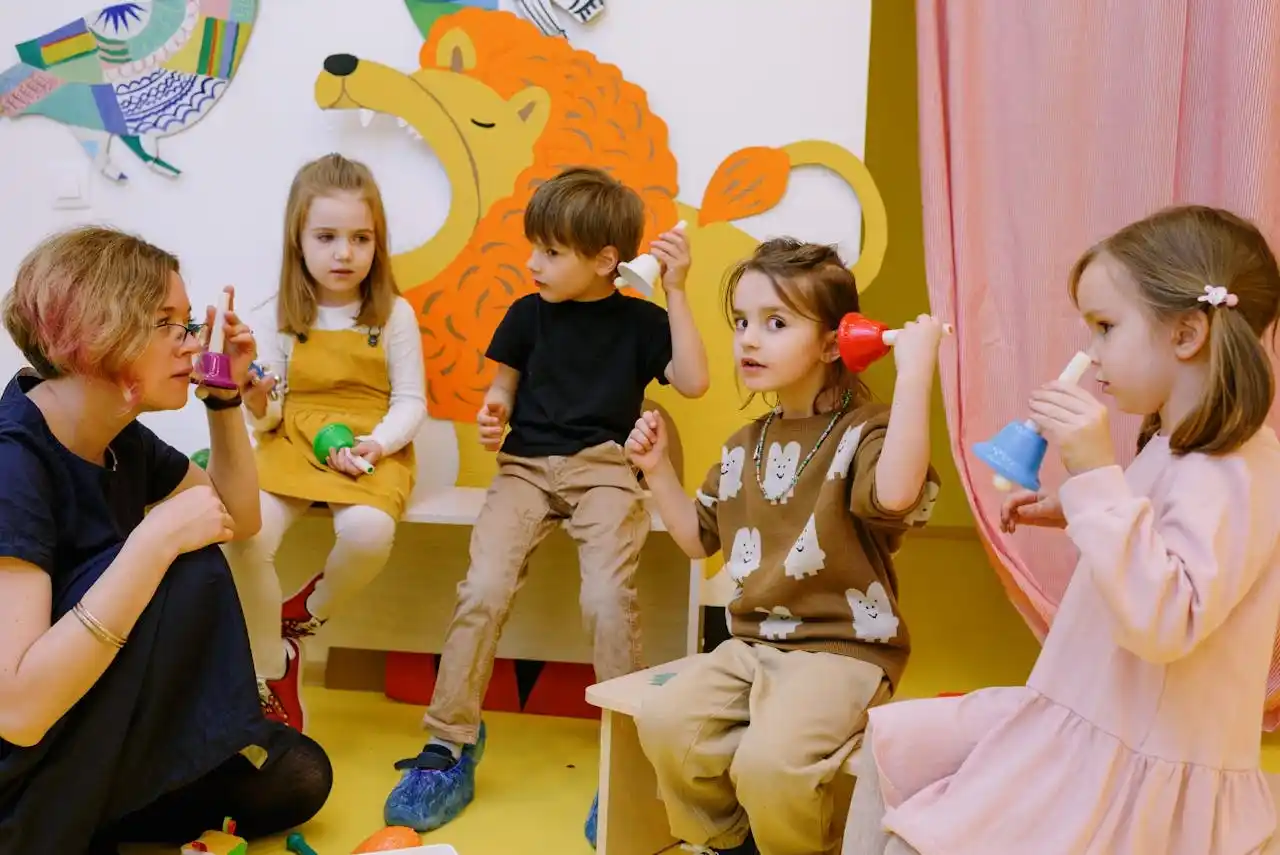
- Caregivers at children’s level
- Sitting on the floor, kneeling at eye level, helping with puzzles, reading books.
- Warm tone of voice
- “You look sad—do you want a hug?” instead of, “Stop crying.”
- Responsive to cries and needs
- When a child cries, someone checks in quickly—not five minutes later.
- Affection and comfort
- Gentle pats on the back, smiles, cuddles with babies, calm support for toddlers.
You want staff who truly like being around children and show it.
What to watch out for (Red flags)
- Caregivers mostly standing back, arms crossed, “watching” instead of engaging.
- Staff barking orders or using sarcasm or shame (“Big boys don’t cry”).
- Crying children who are ignored for long periods.
- Teachers who look burned out, irritated, or disinterested.
Mom moment :
On one tour, I watched a toddler spill his water. Before he even started crying, the teacher knelt down and said, “Oops, that surprised you! Let’s clean it up together.” That tiny moment told me more about her than any brochure ever could.
3. Green Flag #2 : Safe, clean, and reasonably calm environment
No childcare space is spotless—kids live there. But there’s a big difference between “busy, lived-in classroom” and “this feels chaotic and unsafe.”
Green flags for safety and cleanliness
Look around and ask yourself :
- Is the space clean enough?
- Floors swept, tables wiped, bathrooms not disgusting.
- Are dangerous items locked away?
- Cleaning products and medications stored out of reach and in cabinets, not sitting on counters.
- Is the outdoor area secure?
- Fenced yard, working gates, safe equipment.
- Are there safe sleep practices for infants?
- Babies in their own cribs, on their backs, with a flat sleep surface and no bumpers, pillows, or stuffed animals.
You can also ask about :
- How often toys and high-touch surfaces are cleaned
- Emergency plans (fire drills, severe weather, lockdowns, etc.)
Red flags for safety and health
- Strong unpleasant odors that seem chronic, not just “we just changed a diaper.”
- Visible hazards: broken toys, loose wires, peeling paint, unlocked doors leading outside.
- Infants sleeping in swings, bouncers, or car seats as the norm rather than occasionally while supervised.
- No clear sign of emergency plans or safety procedures posted.
4. Green Flag #3 : Reasonable ratios and low staff turnover
You want enough adults so children aren’t constantly waiting, crying, or fighting for attention.
Green flags for staffing
Ask :
- “What is your child-to-teacher ratio for my child’s age?”
- Lower ratios mean more supervision and individual attention.
- “How long has your core staff been here?”
- A lot of long-term staff = more stability for kids.
High-quality childcare systems and accreditation standards emphasize adequate ratios and trained staff as core pillars of quality.
Red flags for staffing
- Very high ratios (one caregiver juggling a large group of young toddlers).
- Staff admitting they’re often short-handed.
- High turnover (“We’re always hiring,” “Most of our teachers are new”).
- No mention of training or professional development.
Mom note :
A little turnover is normal—life happens. What you’re watching for is a pattern of constant churn.
5. Green Flag #4 : Play-based, age-appropriate learning
For babies, toddlers, and preschoolers, play is the work of childhood. You’re not looking for rigorous academics; you’re looking for rich, playful learning.
Green flags in the classroom
As you peek inside rooms, look for :
- Plenty of hands-on materials: blocks, pretend play, sensory bins, books, art supplies.
- Children actively engaged: building, pretending, exploring—not just wandering aimlessly.
- Outdoor time built into the day: kids need fresh air and movement.
- Very limited screen time: especially for under-fives.
Organizations like NAEYC and many education departments highlight play-based activities and responsive interactions as key markers of a high-quality early learning environment.
Red flags in the classroom
- Kids mainly sitting in chairs or on rugs doing worksheets or watching TV.
- Lots of “shhh” and “sit still” and very little joyful noise.
- Toys that are broken, missing pieces, or stored up high where children can’t reach them.
- No books easily accessible to kids.
6. Green Flag #5 : Clear policies and open communication
You’re not just choosing a building—you’re choosing a partnership.
Green flags in communication
Ask :
- “How will you keep me updated about my child’s day?”
- Daily sheets, apps, or quick face-to-face chats at pick-up.
- “Do you have a parent handbook?”
- You should see clear information on illness policy, discipline, payment, closures, and emergencies.
- “Can I drop in to visit?”
- Many high-quality programs have an open-door policy for parents (within security guidelines).
You want staff who :
- Answer your questions without getting defensive
- Are willing to explain the “why” behind their policies
- Seem to actually know the children and families by name
Red flags in communication
- Vague or inconsistent answers about policies (“It depends,” “We’ll figure it out”).
- No written policies or refusal to share them.
- You feel brushed off when you raise a concern.
- Parents don’t seem welcome beyond quick drop-off/pick-up.
7. Red Flags in Your Child’s Behavior (After You Start)
Sometimes the red or green flags only become obvious after your child starts attending.
Green flags in your child’s response
- After an adjustment period, they separate reasonably well (maybe a few tears, but they calm quickly).
- They show you things they did: new songs, art, or pretend games they picked up at care.
- You hear them talk about teachers and friends by name with warmth.
- Their eating and sleeping stay mostly in their normal range (with understandable minor shifts).
Red flags in your child’s response
Definitely pay attention if, over several weeks :
- Your child suddenly becomes very clingy, withdrawn, or unusually aggressive.
- They begin crying or panicking at the mention of going, even after the normal “new routine” adjustment phase.
- You notice frequent unexplained bruises, scratches, or reports of “being in trouble” without clear explanations.
- Eating and sleeping patterns change dramatically and stay that way (nightmares, bedwetting, refusal to eat around care days).
Important :
Any concern about possible neglect, harsh discipline, or abuse is a hard stop. Trust your instincts and follow up immediately with the provider—and, if needed, your pediatrician or local authorities.
8. Putting It All Together : A Simple Red Flag / Green Flag Checklist
Here’s a quick mental checklist you can use on your next tour.
1. First impressions
- Green flag : You’re greeted warmly, staff seem organized, children appear generally content.
- Red flag : The tour feels rushed, chaotic, or you feel like an inconvenience.
2. Caregiver interactions
- Green : Teachers down at kids’ level, comforting, engaging, using gentle voices.
- Red : Lots of yelling, shaming, ignoring crying children, or rough handling.
3. Environment and safety
- Green : Clean-ish (for kids!), secure entry, safe outdoor space, emergency plans posted.
- Red : Broken toys, open doors, unsecured chemicals, strong unpleasant odors.
4. Learning and play
- Green: Play-based activities, books, art, blocks, pretend play, outdoor time.
- Red: Kids mostly sitting, watching screens, or appearing bored and aimless.
5. Policies and communication
- Green : Clear handbook, open-door policy, honest answers, regular updates.
- Red: Vague policies, resistance to questions, no written information, poor communication.
6. Your gut
- Green : You leave thinking, “I could see my child here.”
- Red : You leave feeling uneasy, even if you can’t quite explain why.
Your instincts + these practical checks make a powerful combo.
9. A quick expert-backed reminder
A lot of large studies and policy reviews on early childhood programs say similar things: quality matters—especially warm relationships, safe environments, and supportive, play-rich learning.
That doesn’t mean you need the fanciest, most expensive center in town. Many small, cozy programs are absolutely wonderful. What matters most is that :
- Your child is safe
- Your child is cared for with kindness and respect
- You feel like a true partner in your child’s care
10. Encouragement for your heart
Mama, if this decision feels overwhelming, that’s only because you love your child so deeply.
You’re not “too anxious.” You’re a thoughtful, caring parent doing your best with a big choice in front of you.
Remember :
- No childcare setting will be perfect every single day.
- You are allowed to ask questions—many questions.
- You are allowed to change your mind if something doesn’t feel right later.
Small, steady choices—touring, observing, asking about policies, watching your child’s cues—add up to a safe, loving environment where they can thrive.
You’re not just picking a place. You’re building your child’s little village. And you’re doing beautifully.
11. Your turn, mama 💬
I’d love to hear from you :
What red flags or green flags did you notice when choosing childcare?
Share your experience in the comments—your story might be exactly what another mom needs to hear today.
And if you found this post helpful, feel free to share it with a friend or pin it for later. 💛