
When I saw those two pink lines, my brain did a backflip. Suddenly the to-do list exploded: prenatal appointments, swapping coffee for tea (okay…trying), and figuring out what “acid folic during pregnancy” even meant. I remember standing in the vitamin aisle, staring at labels like I was decoding a secret message. Do I need 400 mcg? 600 mcg? Is folate the same as folic acid? And when do I start—yesterday?
If you’re in that same aisle (or scrolling late at night with a bowl of cereal), I’ve been there, too. The good news: acid folic during pregnancy is simpler than it seems—and hugely important for your baby’s early development. In this friendly guide, I’ll walk you through what it is, how much you need, when to start, mom-tested ways to remember it, and exactly what to ask your provider. By the end, you’ll feel confident you’re doing the right thing for you and your little one.
In this article : [+]
Quick note: This article is educational and mom-to-mom supportive. Always follow your healthcare provider’s advice for your unique situation.
1) What Is “Acid Folic” (and Why It Matters So Much)?
“Acid folic” is simply folic acid—the supplemental, more stable form of folate (vitamin B9). Your body uses it to build new cells and make/repair DNA. In early pregnancy, folic acid plays a starring role in forming your baby’s neural tube—the foundation of the brain and spinal cord—which closes in the first 4–6 weeks (often before you even know you’re pregnant). Taking enough folic acid before and during early pregnancy significantly lowers the risk of serious neural tube defects (NTDs) like spina bifida and anencephaly.
Here’s a confidence boost: getting the recommended amount can prevent many NTDs, with public-health groups estimating reductions up to 50–70% when taken before conception and in early pregnancy. That’s a powerful, simple step you can take.
2) How Much Folic Acid Do I Need—and When Do I Start?
Think of folic acid like setting the stage before your tiny star makes an entrance:
- Before pregnancy / trying to conceive :
400 mcg (0.4 mg) daily for anyone who could become pregnant. Start at least one month before conception so your levels are ready for those earliest weeks. - During pregnancy :
Aim for ~600 mcg daily (most prenatal vitamins cover this range, sometimes 600–800 mcg). It’s hard to hit that amount from food alone, which is why a prenatal is recommended. - Higher-risk pregnancies (specific cases) :
If you’ve had a previous pregnancy affected by an NTD (or have certain medical risks), many experts recommend 4,000 mcg (4 mg) daily, starting one month before conception and continuing through the first 3 months—but only under your provider’s guidance.
Mom tip : pick a consistent time (mine was after breakfast) and pair it with a habit you already do—like brushing teeth or pouring that prenatal smoothie.
3) Folic Acid vs. Folate vs. “Methylfolate”—What’s the Difference?
- Folate = the natural vitamin found in foods (spinach, lentils, etc.).
- Folic acid = the stable, well-researched supplemental form added to many prenatals and fortified grains. It’s the only form proven to prevent NTDs in research.
- Methylfolate (5-MTHF) = an active form you’ll see in some supplements. Some moms prefer it, but public-health guidance still emphasizes folic acid for NTD prevention. Even people with the common MTHFR C677T gene variant are advised to take 400 mcg folic acid daily.
Bottom line: choose a prenatal that reliably provides the recommended amount and follow your provider’s advice. If your prenatal uses methylfolate, that’s okay—but don’t skip the proven folic acid amounts unless your provider directs otherwise.
4) Food Sources You’ll Actually Eat
You can (and should!) get folate from real food, then let your prenatal “top off” your daily needs.
Naturally folate-rich foods :
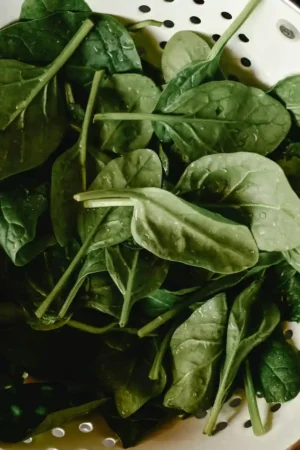
- Dark leafy greens (spinach, kale), asparagus, broccoli
- Beans and lentils (I lived on lentil soup in my first trimester)
- Avocado, oranges, citrus juice, nuts and seeds
Fortified with folic acid (check labels for “enriched” or “fortified”) :
- Breakfast cereals
- Bread and buns
- Pasta and rice
- Cornmeal/tortillas (some brands; check the label)
Since 1998, many U.S. enriched grain products have been fortified with folic acid to help reduce NTDs across the population. Still, labels vary (especially for corn masa products), so make a quick habit of peeking at nutrition panels.
5) The Simplest Game Plan (Step-by-Step)
- Start a prenatal now (if you could become pregnant or you’re TTC) : look for 400–800 mcg folic acid per serving. If you’re already pregnant, aim for ~600 mcg daily (your prenatal likely covers it).
- Put it on autopilot : same time daily, phone reminder on repeat.
- Add 1–2 folate foods per day: think “a handful of greens” or “a bean-y lunch.”
- Keep snacks realistic : fortified cereal + milk or yogurt with fruit = easy win.
- If you’re high-risk : talk with your provider before you self-increase. 4 mg is a medical plan, not a DIY dose.
What I did : I left my prenatal by the coffee machine so I literally couldn’t skip it. On nauseous days, I switched to gummies or took it at night.
6) Common Questions Moms Ask (and Straight Answers)
Yes—start right away. Ideally, it begins before conception because the neural tube closes early, but starting now still supports healthy growth.
Not necessarily. There’s a tolerable upper intake level (UL) of 1,000 mcg/day for synthetic folic acid from supplements/fortified foods (not counting natural folate), mainly to avoid masking a vitamin B12 deficiency. Higher doses (like 4 mg) are for specific high-risk situations and should be prescribed.
Use what your provider recommends. For NTD prevention, the evidence base is strongest for folic acid. People with MTHFR variants are still advised to use 400–800 mcg folic acid daily.
You can take it with or without food—do whatever helps you stick with it consistently.
7) Mom-Friendly Ways to Remember Your Dose
- Habit stacking : Take it when you pour your morning drink, set your diffuser, or start the dishwasher.
- Buddy system : Ask your partner to be your “prenatal pal”—they text “vitamin?” and you reply with a ✔️.
- Make it visible : Keep it where you’ll see it (bathroom sink, coffee station, bedside).
- Nausea hack : Try a different time of day or a gummy prenatal if your OB okays it.
What worked for me was tying it to breakfast and setting a phone alarm called “tiny brain + spine builder.” Cheesy? Yep. Effective? Absolutely.
8) Special Situations to Discuss With Your Provider
- Previous NTD-affected pregnancy (you may need 4 mg under supervision).
- Certain health conditions or meds (e.g., some anti-seizure medications can interact with folate pathways). Your OB may tailor your dose.
- B12 status (especially if you’re vegan/vegetarian): because too much folic acid can mask B12 deficiency, ask whether a B12 check makes sense for you.
- Digestive issues or bariatric surgery: you may absorb nutrients differently—flag this to your care team.
Bring your prenatal bottle (or a photo of the label) to your next visit so your provider can confirm the dose and other key nutrients (iron, iodine, choline, vitamin D).
9) What the Experts Say ?
- CDC & USPSTF : Everyone who could become pregnant should get 400 mcg folic acid daily, starting at least one month before conception, to reduce the risk of NTDs.
- ACOG : During pregnancy, aim for ~600 mcg daily; it’s tough to meet this from food alone—hence a prenatal vitamin.
- High-risk guidance: For women with a prior NTD-affected pregnancy, experts recommend 4,000 mcg (4 mg) daily under medical supervision, beginning one month prior and through the first trimester.
- Impact: Taking folic acid before and during early pregnancy can prevent many NTDs—often cited as 50–70% fewer cases.
10) A Day-In-The-Life Example You Can Copy
- Morning : Prenatal with 400–800 mcg folic acid + breakfast (eggs + spinach or fortified cereal).
- Lunch : Lentil soup or bean salad (hi, folate!).
- Snack : Orange or avocado toast (both folate helpers).
- Dinner : Whole-grain pasta (fortified) with broccoli.
- Before bed : If mornings were rough, take your prenatal now instead—consistency wins.
Real talk : some days you’ll crush it, some days you’ll nibble crackers and call it gourmet. That’s okay. Your steady prenatal habit is doing the heavy lifting.
11) Quick Label-Reading Guide (No Overthinking Required)
- Look for :
- “Folic acid” or “folate (as folic acid)” on a prenatal label
- A daily amount around 400–800 mcg (or ~600 mcg if pregnant)
- Also helpful in a prenatal : iron, iodine, choline, vitamin D (your provider can personalize this)
- Caution : Don’t stack multiple high-dose supplements. Unless your provider prescribes it, avoid going over 1,000 mcg folic acid/day from supplements/fortified foods.
12) Mini FAQ for Fast Peace-of-Mind
Most guidelines say food alone usually isn’t enough to meet the pregnancy target—that’s why prenatals are standard.
Take it when you remember. Don’t double up unless your provider says so—just get back on your daily rhythm.
Fortified foods help, but consistency is easier with a prenatal, especially early in pregnancy.
13) Wrapping Up with Love & Support
Mama, you’re doing such an amazing job already. Focusing on acid folic during pregnancy is one of those small, steady choices that makes a big difference. You don’t have to be perfect—just consistent. Celebrate your wins (yes, taking your prenatal counts!), rest when you need to, and remember: you and your baby are a team, and you’re learning together. You’ve got this. 💛
What’s your best trick for remembering your prenatal? Drop it in the comments—another mama might need your idea tonight. And if you’d love more cozy, mom-tested tips like this, join my weekly email—gentle reminders, simple checklists, zero overwhelm.