
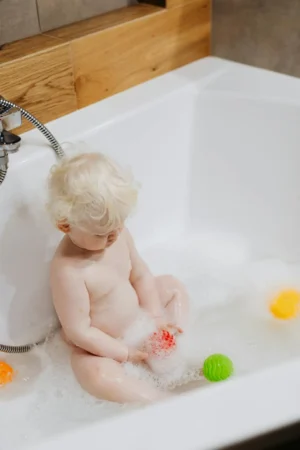
I still remember the phase when Bath Time for Toddlers felt like a full-body workout for me. One night my toddler was sobbing because the water was “too wet” (their words, not mine), the next night they were splashing like a wild seal, soaking the floor, my clothes, and probably the neighbor’s ceiling too.
Some nights I’d think, Is this really worth it ? I was tired, the floor was slippery, and I was just trying to keep them alive while also getting them vaguely clean.
If you’ve ever sat on the bathroom floor thinking, “There has to be an easier way,” you are so not alone. I’ve been there, too—torn between wanting to make bath time fun and needing it to be quick, safe, and meltdown-free.
The good news ? With a little prep, a few safety non-negotiables, and some playful ideas, bath time can actually become one of the calmest (and sweetest) parts of your day. In this post, we’ll walk through how to make Bath Time for Toddlers both safe and fun—without you needing to be a professional entertainer or lifeguard.
Let’s turn the chaos into cozy, okay ?
In this article : [+]
1. Safety First : Non-Negotiables in the Tub
Before we talk about toys, bubbles, and cute bath photos, we need to talk about safety. This part isn’t glamorous, but it’s the most important.
Never Leave Your Toddler Alone
This is the big one. Toddlers can drown in just a few inches of water, and it can happen fast.
- Stay within arm’s reach at all times.
- If you forgot the towel in the other room ? Take your toddler out of the tub, wrap them in something nearby, and then go get it.
- Phone buzzing in the other room? It can wait. Your child can’t.
I know it’s annoying to have to think ahead, but once it becomes a habit, it feels natural.
Check the Water Temperature
Toddlers are extra sensitive to hot water.
- Aim for comfortably warm, not hot.
- Test the water with the inside of your wrist or elbow—it should feel warm and cozy, never hot.
- If possible, set your home’s water heater so the water can’t get dangerously hot (many pediatricians recommend around 120°F / 49°C).
A quick test every time is much easier than dealing with a scared or burned little one.
Prevent Slips and Bumps
Wet tubs are slippery—even for us, let alone wobbling toddlers.
- Use a non-slip mat or textured decals on the bottom of the tub.
- Add a soft cover over the spout to protect little heads from bumps.
- Show your toddler the rule: “We sit in the tub; we don’t stand or jump.” (They’ll still try… but keep repeating it calmly.)
Keep Products Out of Reach
Toddlers love to grab and taste things.
- Store shampoo, razors, cleaners, and adult products up high or in a locked cabinet.
- Only bring in what you’re using; put it away when you’re done.
Drain the Tub Right Away
After bath time, drain the water as soon as your child is out.
- Toddlers are curious and may try to climb back in when you turn your back.
- Make it part of your routine: toddler out → towel on → tub drained.
2. Set Yourself Up for Success Before the Water Starts
One of the biggest stress relievers ? Preparing before your toddler even steps into the bathroom.
Do a Quick “Bath Setup” Checklist
Before turning on the tap, gather :
- Towel and washcloth
- Gentle toddler soap/shampoo
- Clean diaper/underwear
- Pajamas
- Fresh clothes (if it’s a daytime bath)
- Lotion (if you use it)
Think of it like packing a mini “bath kit.” When everything is within reach, you don’t have to choose between safety and that forgotten item.
Choose the Right Time of Day
Bath time doesn’t have to be at night.
- For some toddlers, evening baths are soothing and help with bedtime.
- For others, bath time is more like a rave—lots of splashing and squealing.
If evenings are chaos, it’s totally okay to move baths earlier in the day when everyone has more patience. Spot-clean at night and save full baths for calmer windows.
3. Making Bath Time for Toddlers Actually Fun
Once safety and setup are done, now we can have fun.
1. Rotate Simple Toys
You don’t need fancy bath gadgets. Some favorite options :
- Plastic cups, ladles, and spoons for pouring
- Colanders or strainers
- Small plastic animals or cars
- Stacking cups
Rotate toys every few days so “old” toys feel new again. I like to keep a small basket of bath toys and swap them out—instant excitement.
2. Try Bath Crayons and Foam Shapes
- Bath crayons let your toddler draw on the tub walls, then you rinse it off.
- Foam letters and shapes stick to wet walls—great for play and learning (colors, letters, shapes).
You can play :
- “Find the red one.”
- “Can you spell your name?” (or just pretend!)
- “Let’s make a rainbow.”
3. Sensory Play in the Tub
Bath time is a built-in sensory activity.
Try :
- Colored water (a drop of food coloring is usually safe and doesn’t stain the tub—test once to be sure).
- “Sink or float?” with different toys.
- “Car wash” for their toy vehicles.
You’re not just getting them clean—you’re giving them science, creativity, and fine motor practice without extra effort.
4. A Simple Bath Time Routine (So They Know What to Expect)
Toddlers love predictability. A simple, repeated structure helps cut down on resistance.
Here’s an example of a calm bath time routine :
- Announce Bath Time
- “In 5 minutes, it’s bath time !”
- Use a little timer so the transition feels less like a surprise and more like a plan.
- Bathroom and Undress
- Quick potty (if your toddler is training or trained).
- Clothes off, diaper off, into the hamper.
- Water Check Together
- Let them put their hand in and say, “Ooo, warm!”
- This gives them a sense of involvement.
- Play & Wash
- First : a few minutes of free play.
- Then : “Okay, time to wash!” and you do hair/face/body.
- Countdown to Done
- “Two more scoops of water, then we’re all done.”
- “Last toy race, then we pull the plug!”
- Out, Dry, and Cozy
- Wrap them in the towel and do a cuddly “burrito wrap.”
- Lotion, pajamas, and maybe a quick story if it’s near bedtime.
You can tweak this routine to fit your family, but keeping the same basic order almost every time helps your toddler know what’s coming next.
5. Handling Common Bath Time Struggles
Let’s be real—some nights it’s not magical. It’s meltdown city. Here are a few frequent battles and gentle ways to handle them.
“I Don’t Want to Get In!”
Sometimes toddlers resist the transition more than the bath itself.
Try :
- Choices : “Do you want the blue towel or the yellow towel ?” “Should your duck or your boat go in first ?”
- Routine countdown : “When the timer beeps, we go to the bath.”
- Joining them : Roll up your sleeves and let your hands get wet too. “Mommy’s going to wash the cup; you wash the spoon !”
Avoid turning it into a power struggle when possible. Calm, consistent boundaries plus a little playful energy go a long way.
Fear of Water or the Drain
A surprising number of toddlers are scared of :
- Water on their face
- The noise of the drain
- The idea they’ll “go down the drain” too
Reassure and show :
- Let them hold a toy near the drain to see that the toy doesn’t get “sucked in.”
- Have them step out of the tub before you pull the plug.
- Use a dry washcloth over their eyes while you rinse their hair.
Hair Washing Battles
Ah, the legendary hair-wash meltdown.
Ideas :
- Use a rinse cup with a soft edge or a rinse visor to keep water off their face.
- Let them hold a small towel over their eyes.
- Use a simple script: “Head up like a giraffe. Eyes to the ceiling!”
- Do one quick, thorough wash instead of many half-hearted rinses.
If it’s been a long day, it’s okay not to wash hair every single bath unless they’re sticky, sandy, or covered in yogurt.
“I Don’t Want to Get Out!”
Honestly, sometimes the problem is the opposite—they love it too much.
Try :
- Giving a 5-minute, 2-minute, and 1-minute warning.
- Creating a “special after-bath moment”: cozy towel cuddle, choosing pajamas, or picking the bedtime book.
- Reminding them: “Water is all done. We’ll do more bubbles tomorrow.”
6. Gentle Skin & Hair Care for Toddlers
You don’t have to scrub your toddler like a dirty dish. Their skin is still delicate.
How Often Do Toddlers Need a Bath ?
For many toddlers, a full bath with soap a few times a week is enough, especially if they have dry skin. On messy days (hello, spaghetti night), you can add extra baths as needed.
Spot clean faces, hands, and diaper area daily, of course.
Choosing Products
- Look for gentle, tear-free, fragrance-free products when possible, especially if your child has sensitive skin or eczema.
- A 2-in-1 body and hair wash can simplify things.
- Pat skin dry instead of harsh rubbing, and apply a gentle moisturizer if needed.
If you’re ever unsure about rashes, dryness, or irritation, talk with your pediatrician for personalized advice.
7. Building Independence (Without Sacrificing Safety)
Toddlers love to feel like “big kids.” Bath time is a great place to practice independence in a safe way.
Give Them Simple “Jobs”
- Let them wash their tummy or arms while you handle the harder parts.
- Ask them to “wash the soap off the duck” to practice rinsing.
- Let them help put bath toys back into a bin at the end—this builds habits and keeps the tub tidy.
Use a Step Stool After the Bath
After they’re dry and dressed :
- Have a sturdy step stool at the sink so they can wash their hands or face.
- Let them help comb their hair (even if you redo it later).
Little by little, you’re teaching self-care skills that will make future routines easier.
8. What the Experts Say (In Simple Terms)
Pediatricians and safety organizations generally agree on a few big points when it comes to Bath Time for Toddlers :
- Constant supervision is non-negotiable. Even a small amount of water can be dangerous if a child slips or can’t get up.
- Safe water temperature matters. Many experts suggest setting your water heater to a safe level (around 120°F / 49°C) to prevent accidental scalds.
- Gentle, regular hygiene is enough. Most toddlers don’t need harsh scrubbing or strong products; mild cleansers and lukewarm water usually do the trick.
If you ever have questions about your child’s skin, rashes, or reactions to products, your pediatrician or a pediatric dermatologist is your best partner.
9. When Bath Time Just Isn’t Happening
Some days are just… a lot. Maybe your toddler skipped a nap and is a meltdown waiting to happen, or bedtime is already late.
It’s okay if bath time doesn’t always look perfect—or even happen at all.
Quick alternatives for “survival mode” days :
- Washcloth wipe-down : Warm washcloth for face, hands, neck, and diaper area.
- Feet and hands rinse : Especially if they’ve been barefoot outside.
- Dry shampoo or simple ponytail : For older toddlers with longer hair.
You’re not a bad parent if you skip a bath. You’re a human parent taking care of a human child—and sometimes less is more when everyone is already overwhelmed.
10. Sample Bath Time for Toddlers Routine You Can Steal
Here’s a simple routine you can copy and tweak :
- Announcement :
“In 5 minutes, it’s bath time, then cozy pajamas and a story!” - Prep :
You quickly gather towel, PJs, diaper/underwear, and soap while your toddler finishes playing. - Bathroom Transition :
They help carry a toy to the bathroom. Quick potty (if potty training), clothes off, into hamper. - Water Check :
You fill the tub, test the water, and let them dip a hand in. - Play :
5–10 minutes of free play: cups, foam letters, a couple of small toys. - Wash :
- You wash hair first (if needed, using towel over eyes).
- Quick gentle wash of body with a soft washcloth.
- Countdown to Done :
“Two more toy races… last scoop… okay, all done! Time to pull the plug!” - Out and Cozy :
Wrap in towel, snuggle, dry off, lotion if needed, then pajamas. - After-Bath Calm :
Maybe a short story, lullaby, or cuddle before bed.
That’s it. Simple, predictable, repeatable.
Encouragement for Tired Moms
Mama, if bath time currently feels like chaos, please hear this: you’re not doing it wrong. Toddlers are intense, curious, and opinionated—it’s part of how they’re wired.
You don’t need a Pinterest-perfect bathroom or a basket of fancy toys. You just need:
- A safe setup
- A simple routine
- A bit of playfulness
- And a whole lot of grace for yourself
Small changes really can transform bath time from “Ugh, here we go again” into a calm(ish), connecting moment in your day. And if some nights still go sideways? That’s okay. You’re learning together.
You’ve got this. 💛
Call-to-Action
Now I’d love to hear from you :
What’s your go-to trick for making Bath Time for Toddlers easier or more fun?
Do you have a favorite toy, song, or routine that works like magic in your house?
Share it in the comments—another tired mama might desperately need your idea tonight. And if you found this helpful, save it for later or share it with a friend who’s in the thick of toddler life too.