
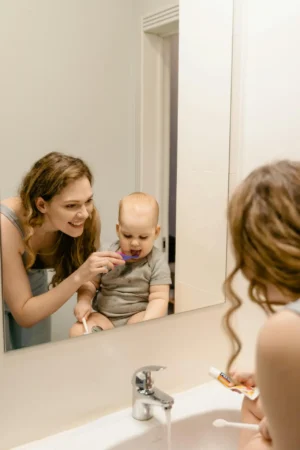
If you’ve ever tried to brush your toddler’s teeth while they clamped their mouth shut, arched their back like a cat, or ran down the hallway with the toothbrush in their fist… same, mama.
When my toddler first hit the “NO!” stage, Brushing Little Teeth for Toddlers felt like an Olympic sport. I knew it was important, but every bedtime turned into negotiations :
“Just three more seconds !”
“One more song and then we’re done !”
“Open big like a lion… please ?”
I remember wondering :
Is this really doing anything ? Am I even getting the back teeth? Do I push harder or back off ? And how much toothpaste is actually safe ?
If you’ve had these thoughts too, you are absolutely not alone. Toddler dental care doesn’t come with an instruction manual, and a lot of us are just trying to protect those tiny teeth without starting World War III twice a day.
The good news ? With a few simple strategies, some fun tricks, and clear guidelines, you can make brushing less of a battle and more of a habit. In this post, we’ll walk through exactly how to care for your toddler’s teeth—step by step—so you can feel confident you’re doing enough, without being perfect.
In this article : [+]
1. Why Toddler Toothbrushing Matters (Even for Baby Teeth)
It’s easy to think, “They’re just baby teeth, they’ll fall out anyway.” But those little teeth do a lot of important jobs :
- Help your child chew and get proper nutrition
- Support speech development
- Hold space for adult teeth coming in later
- Impact how comfortable and confident they feel when they smile
Cavities in baby teeth can be painful, affect eating and sleep, and sometimes require treatments that are stressful for everyone. The earlier you build good habits, the easier it is to protect both baby AND future adult teeth.
Think of brushing as teaching a life skill—not just a chore. You’re helping your child learn, “We take care of our body, including our mouth.”
2. Set Up the Basics : Toothbrush, Toothpaste, and Position
Before you even start brushing, having the right tools makes things smoother.
Choose the Right Toothbrush
Look for :
- A soft-bristled toothbrush
- A small head designed for children
- A non-slip handle that’s easy for small hands
You can even let your toddler pick the color or character. When they feel ownership (“That’s my dinosaur toothbrush!”), they’re more interested in using it.
Use the Correct Amount of Toothpaste
Most experts recommend using fluoride toothpaste in tiny amounts for toddlers because fluoride helps protect teeth from cavities. For young kids, the amount really matters:
- Under age 3 : a tiny smear of toothpaste (about the size of a grain of rice)
- Ages 3–6 : a pea-sized amount of toothpaste
It might look like almost nothing on the brush—and that’s okay. The fluoride is still doing its job.
Find a Comfortable Brushing Position
Many toddlers don’t love standing at the sink while you hover over them. Try different positions until you find what works :
- Sitting on your lap, head resting against your chest
- Lying down with their head in your lap on the couch or bed
- Standing on a stool facing the mirror while you stand behind them
Personally, I found the “head in my lap” method the easiest. I could see all the teeth, and my child still felt cozy and secure.
3. How to Brush : Simple Step-by-Step for Little Teeth
Here’s an easy way to think about Brushing Little Teeth for Toddlers—nothing fancy, just gentle and consistent.
Step-by-Step Brushing Routine
- Wet the brush and add a tiny bit of toothpaste
- Gently lift their lip so you can see the teeth clearly
- Use small, gentle circular motions on:
- The outside (cheek side)
- The inside (tongue side)
- The chewing surfaces
- Brush along the gum line—this is where plaque likes to hide
- Encourage them to spit out any extra toothpaste (it’s okay if they don’t fully get this yet)
- Wipe around the mouth if they don’t like the foamy feeling
Aim for twice a day :
- Once in the morning
- Once right before bed, after the last food or drink (besides water)
Most toddlers can’t brush effectively on their own yet—even if they insist they can—so think of it like this:
“You brush first, then I’ll check and finish.”
Letting them go first gives them independence, and then you quietly “polish up” the areas they missed.
4. Make Brushing Fun (So It’s Not a Daily Battle)
If brushing feels like a punishment, toddlers will fight it. But if it feels like a game or a special moment with you, they’re much more likely to cooperate.
Fun Ideas to Try
- Sing a brushing song
Use “Happy Birthday” twice, the ABCs, or make up your own silly song. The goal is about two minutes of total brushing time. - Use a timer or app
A cute sand timer or kid-friendly brushing app can make it feel like a challenge instead of a chore. - Tell a story
“We have to chase away the sugar bugs before they build houses on your teeth!” - Brush together
Stand in front of the mirror and brush your teeth at the same time. Toddlers love copying you. - Let them brush a toy’s teeth
Give them a spare toothbrush and a stuffed animal or doll. They can “practice” on the toy before it’s their turn.
In my house, the day I said, “Let’s see who can make the most bubbles—your teeth or mine?” everything changed. Suddenly brushing was a contest, and my toddler was all in.
5. Build a Consistent Brushing Routine
Toddlers thrive on predictability. When brushing always happens at the same times, it becomes less negotiable and more “just what we do.”
Make Brushing Part of the Daily Rhythm
You could try :
- Morning :
Wake up → potty/diaper → brush teeth → breakfast - Evening :
Dinner → playtime → bath → brush teeth → story → bedtime
Keep the order as consistent as possible. Instead of asking :
“Do you want to brush your teeth now?”
(which invites a “No”), try :
“Okay, now it’s toothbrushing time, then we’ll read your book.”
Brushing is just one step in a calm bedtime routine—not a separate, negotiable event.
6. Handling Resistance, Tears, and Power Struggles
Even with the best routine, there will be nights when your toddler screams, clamps their mouth shut, or runs away. You’re not failing, you’re parenting a tiny human with big feelings.
Use Gentle Boundaries + Empathy
Try combining understanding with calm firmness :
- Acknowledge feelings :
“I know you don’t feel like brushing. You’re tired and done for the day.” - Restate the boundary :
“We still need to clean your teeth to keep them healthy and strong.” - Offer a choice within the boundary :
- “Do you want to sit on my lap or stand on your stool?”
- “Should we use the blue toothbrush or the green one?”
- “Do you want the dinosaur song or the twinkle song while we brush?”
If they refuse, keep your voice calm and neutral. Losing your cool (which we all do sometimes!) often makes them dig in more.
What About Full-On Meltdowns?
On really tough days :
- Keep brushing short and focused—even 20–30 seconds is better than nothing
- Aim for one “good” brush a day (usually bedtime) and a lighter one in the morning if needed
- Offer extra cuddles afterward so brushing doesn’t feel like the last straw of the day
You’re playing the long game. You don’t have to win every single battle to build a solid habit.
7. Extra Cavity-Prevention Tips (Beyond Brushing)
Brushing Little Teeth for Toddlers is important, but it’s only one part of protecting their smile.
Watch Sugary Drinks and Snacks
- Keep juice, flavored milk, and sugary drinks to a minimum
- Offer water between meals, not milk or juice on demand all day
- Try to limit frequent grazing on crackers, cookies, or sticky snacks that cling to teeth
No Bottles in Bed
If your toddler still uses a bottle :
- Avoid putting them to sleep with milk or juice—this can pool around the teeth and cause decay
- If they need a comfort bottle, fill it with water only
Start Flossing Early
Once two teeth are touching, you can begin gently flossing between them once a day. You can use :
- Regular dental floss
- Child-friendly floss picks (often easier for little mouths)
You don’t have to be perfect—just doing something regularly helps.
8. Expert Insight : What Dentists Recommend
Most pediatric dental and medical organizations recommend :
- Brushing twice a day with a small amount of fluoride toothpaste
- A smear (grain-of-rice size) for young toddlers and a pea-sized amount for older toddlers and preschoolers
- Adult help and supervision with brushing until around age 7–8, when kids have enough coordination to do it well
They also recommend a first dental visit by age 1 or within six months of the first tooth. That early visit is mostly about prevention, education, and helping your child get comfortable at the dentist—not about fillings or scary procedures.
Of course, every child is different, so it’s always a good idea to ask your pediatrician or pediatric dentist if you’re unsure about your child’s specific needs.
9. When to Call a Dentist
You don’t need to panic over every little discoloration, but it is worth calling a dentist if you notice :
- Brown, black, or white spots on the teeth
- Teeth that seem sensitive when eating or drinking
- Swollen, red, or bleeding gums
- A persistent bad smell from the mouth
- Your child complaining of mouth or tooth pain
Trust your instincts. If something feels off, it’s okay to call and ask, “Is this normal, or should we come in ?”
10. Encouragement : You Really Are Doing Enough
Mama, if brushing time has ever ended with tears (yours or theirs), please hear this :
You are not a bad parent.
You are not failing because your toddler bites the toothbrush or refuses to open wide.
You’re showing up, learning, and trying again—and that matters.
Healthy habits are built over weeks and months, not in one perfect bedtime. If tonight’s brushing was 30 seconds of chaos, but you still tried ? That counts. If you forgot one morning but got back on track at night? That counts too.
Celebrate the small wins :
- “Wow, you opened so big !”
- “You brushed your own teeth today, I’m so proud of you.”
- “Thank you for letting me help keep your teeth strong.”
Your love, presence, and consistency matter more than perfectly brushed molars every single day.
You’ve got this. 💛
11. Let’s Help Each Other Out
I’d love to hear from you !
- What’s your biggest struggle with Brushing Little Teeth for Toddlers ?
- Do you have a silly song, game, or trick that makes toothbrushing easier ?
Share your experience or tips in the comments—another tired parent might really need your idea tonight. And if you found this helpful, feel free to send it to a friend or join my email list for more down-to-earth, mom-tested tips for everyday life with little ones.