
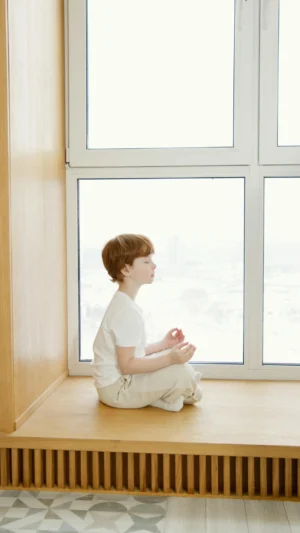
The first time I realized I needed real Calming Strategies for Overwhelmed Kids, we weren’t in some big crisis.
We were… in the kitchen.
It was 5 p.m. Everyone was tired and hungry. I asked my child to put their cup on the table and suddenly it was like a switch flipped :
- tears
- shouting
- flopping on the floor
- “NOOOO!” over a cup.
My brain went :
“Seriously? Over this ?”
I felt my own frustration rising. Part of me wanted to say, “Stop it right now!” Another part of me wanted to cry on the floor with them.
That’s when I started really looking into Calming Strategies for Overwhelmed Kids — not just “stop the tantrum” tricks, but tools that actually help little nervous systems come back to calm… and help us stay steady, too.
What I learned changed everything :
- Kids aren’t giving us a hard time; they’re having a hard time.
- Their brains and bodies get flooded, and they need help coming back to center.
- The more we practice calm tools with them (before things get wild), the easier those tools are to use in the storm.
In this post, I’ll share simple, realistic strategies you can use at home — no fancy equipment, no perfect parenting required. Just small moments that can make big feelings feel a little more manageable for both of you. 💛
In this article : [+]
1. Start with Breath : Playful Deep Breathing Kids Actually Enjoy
When kids are overwhelmed, their breathing gets fast and shallow. Slow, deep breaths literally tell the body, “You’re safe,” and activate the calming part of the nervous system. Studies show that even a few slow, deep breaths can reduce stress and lower kids’ physiological arousal.
But telling a worked-up child, “Take a deep breath” often doesn’t work. So we turn it into play.
Easy breathing games
Belly Buddy Breathing
- Have your child lie on their back.
- Place a stuffed animal on their tummy.
- Say, “Let’s rock your buddy to sleep. Breathe in and make him go up… breathe out and let him come down.”
Flower and Bubbles
- Pretend to hold a flower in one hand and bubbles in the other.
- “Smell the flower” (slow inhale through the nose).
- “Blow the bubbles” (slow, gentle exhale through the mouth).
Hot Cocoa Breathing
- Pretend you’re holding a warm mug of hot chocolate.
- “Smell the cocoa” (breathe in).
- “Blow to cool it down” (breathe out).
Mom-to-mom note
I used to think my child would never go for this. But once we practiced during calm moments — bedtime, snuggle time, silly time — he started using “hot cocoa breaths” on his own when he felt upset. Not every time, but enough to see it was sinking in.
2. Use Grounding Games to Bring Them Back to the Present
When kids are overwhelmed, their brains are often stuck in “this is too much” mode. Grounding exercises help them notice their surroundings and body, which can calm anxiety and big feelings.
One simple grounding tool used for anxiety in both kids and adults is the 5-4-3-2-1 technique, which helps bring attention back to the present moment.
5-4-3-2-1 “Super Senses” Game
You can make this into a superhero or detective game :
Ask your child to :
- 5 things they can see
- 4 things they can feel/touch
- 3 things they can hear
- 2 things they can smell
- 1 thing they can taste (or “1 thing you’re grateful for” if taste is tricky)
Keep your voice soft and steady, like you’re on a secret mission together.
Body scan for kids
You can also do a mini body scan :
- “Let’s wiggle our toes… now freeze. Feel your toes.”
- “Squeeze your hands into tight fists… and let go. Feel the difference.”
These little check-ins help kids reconnect with their bodies instead of being swept away by big feelings.
3. Move the Big Feelings Through the Body
Sometimes the best calming strategy isn’t “calm” at all — it’s movement.
Overwhelmed kids often feel like their bodies are full of buzzing energy. Before they can sit and breathe, they may need to move it out in a safe way.
Movement ideas
- Animal walks :
- Bear walks (hands and feet on the floor)
- Frog jumps
- Crab walks
- Shake-and-freeze game :
- “Shake your hands/arms/legs as fast as you can… and FREEZE!”
- Wall push :
- Have them push against the wall as if they’re trying to move it. This gives deep pressure to muscles and can feel grounding.
- Heavy work :
- Pushing a laundry basket, carrying a small stack of books, or helping move cushions around.
Many pediatric therapists talk about “heavy work” and movement as tools to help kids regulate their nervous systems, especially when they’re wired and overwhelmed.
How I use it
If I see my child getting wound up, I’ll say :
“Your body looks so full of energy. Want to be a stomping dinosaur with me for 30 seconds and then do a dragon breath?”
We stomp, jump, roar — then pause, breathe, and reconnect.
4. Create a Cozy “Calm-Down Spot” (Not a Punishment Corner)
Think of this like a little nest where your child can go to feel safe, not a “naughty corner.”
What to include
You don’t need anything fancy. A corner of the couch or a little tent works great. You might add :
- a soft blanket or pillow
- a favorite stuffed animal
- a small basket of books
- a simple feelings chart
- a sensory bottle or glitter jar to shake and watch settle
- a stress ball or Play-Doh
Your message is :
“This is a place where you can go when your feelings feel too big. I can come with you if you want.”
Practice when they’re calm
Show them the spot during a peaceful moment :
- “This is your cozy corner.”
- “When you’re mad or overwhelmed, you can come here to feel safe and calm.”
You can even “pretend practice” :
“Let’s pretend you’re really mad because your tower fell. Where could you go?”
By practicing in calm times, the brain learns, “This is a safe place to reset,” instead of seeing it as punishment.
5. Try Sensory Tools to Soothe Overloaded Nervous Systems
Overwhelmed kids are often sensory overloaded — too loud, too bright, too much. Sensory tools help calm their bodies and brains by giving them something comforting to feel, squeeze, or look at.
Sensory ideas
- Squeeze something : stress ball, squishy toy, or just tight fists that then release.
- Deep pressure :
- bear hugs (with permission!)
- pressing a pillow against their chest
- a weighted blanket or heavy comforter (for short periods and age-appropriate use)
- Soothing visuals :
- a glitter jar
- watching a lava lamp or slow video of waves
- Fidget tools :
- a simple tangle toy, pop-it, or piece of fabric to rub
Some occupational therapists and pediatric mental health providers use sensory-based strategies to help kids regulate their emotions, especially those who get overwhelmed easily.
Mom note
I used to think sensory tools were just toys. But once I started offering them intentionally — “Your body looks overloaded; do you want your squishy ball or your blanket?” — I noticed my child settling more quickly.
6. Build Simple, Predictable Routines to Lower Everyday Overwhelm
Here’s an underrated calming strategy : routines.
When kids know what’s coming next, their brains feel safer. Predictable routines reduce daily stress, power struggles, and emotional overload. Research shows that consistent routines help children feel secure, lower anxiety, and support better behavior and cooperation.
Where routines help most
- Mornings (getting dressed, breakfast, leaving the house)
- After school / daycare
- Bedtime
You don’t need a strict schedule — just a predictable flow.
Example bedtime routine :
- Bath or wipe-down
- Pajamas
- Brush teeth
- Story time
- Snuggles + one “feelings question” (“What made you happy today?”)
- Lights out
Visual schedules
For younger kids, picture schedules can help:
- a sun for wake-up
- a shirt for getting dressed
- a spoon for snack
- a book for reading time
You’re telling their brain :
“You don’t have to worry about what’s next. We’ve got a plan.”
And a less worried brain = fewer overwhelmed outbursts.
7. Model Calm : You’re the “Nervous System Coach”
This part is hard but important: our calm helps their calm.
Kids often “borrow” our nervous system. When we stay steady (or at least steadier), it helps their bodies return to baseline. Pediatric and child-psychology resources often emphasize that parents’ calm, validating presence is a key factor in helping children manage stress.
Tiny things you can do in the moment
- Lower your voice instead of raising it.
- Take a visible deep breath and say, “I’m calming my body.”
- Use simple, steady phrases:
- “You’re safe. I’m here.”
- “We can handle this together.”
Pause before reacting
If you feel about to explode (been there so many times), try :
- Turn away for 5 seconds.
- Breathe in, count to 4… breathe out, count to 4.
- Then respond.
You might say :
“I’m feeling really overwhelmed too. I’m going to take two deep breaths and then we’ll talk.”
You’re not just calming yourself — you’re teaching them what it looks like to calm down without yelling or hurting.
8. Use Validation as a Calming Tool
Sometimes, kids get more worked up because they feel misunderstood or dismissed. A simple “You’re fine” can make them feel more alone in their big feelings.
Validation is like an emotional hug. It says:
“Your feelings make sense. I see you.”
Validation phrases
- “You’re really upset that we have to leave. That’s hard.”
- “You feel disappointed you can’t have another snack.”
- “It looks like you’re worried about going to school.”
- “I can tell you’re frustrated. I’m here with you.”
A 2024 parenting piece summarizing research on tantrums noted that phrases like “I see you’re upset, I’m here to help” can de-escalate kids’ big feelings and support emotional regulation. The Times of India
Validation doesn’t mean you give in. You can still hold boundaries:
“You’re really mad that screen time is over. It’s okay to be mad. Screen time is still done.”
You’re combining empathy + limit, which is calming and secure.
9. Practice Calming Strategies When Everyone’s Not Overwhelmed
One of the biggest mistakes I made at first was only trying calming strategies in the middle of a meltdown. Spoiler: that’s when kids are least able to learn new skills.
Experts often recommend practicing coping tools during calm moments, so kids can access them more easily when they’re distressed.
Easy ways to practice
- Do “belly buddy breathing” at bedtime, just for fun.
- Play the 5-4-3-2-1 game in the car or on a walk.
- Do “shake and freeze” before dinner to get sillies out.
- Visit the calm-down spot to read a story, not just when emotions are big.
The more familiar these tools are, the less “weird” they feel when your child is truly overwhelmed.
10. Don’t Forget You : Calming Strategies for Parents, Too
You matter in this equation. A lot.
You can’t be your child’s calm anchor if you’re completely drained all the time. It doesn’t have to be a spa day (though that would be nice) — small pockets of care add up.
Parent calm ideas
- Step outside for 2 minutes of fresh air.
- Keep a water bottle nearby — hydration really does help.
- Practice your own grounding:
- “What are 3 things I can see right now?”
- “What are 2 things I can feel?”
- Have a go-to mantra, like:
- “This is hard, but it’s not an emergency.”
- “My child is having a hard time, not giving me a hard time.”
Some child mental-health resources even suggest a simple “connection rule” — a few minutes of undivided attention in the morning, after school, and before bed — to strengthen your bond and boost kids’ emotional resilience. advocarebrandywinepediatrics.com+1
Taking care of yourself isn’t selfish. It’s part of how you take care of them.
Encouragement : You Don’t Need to Do All of This at Once 💛
Mama, if your child melts down in the grocery store, screams in the car, or crumples into tears over the “wrong” color cup, it doesn’t mean you’re failing. It means you’re raising a human with a sensitive little nervous system in a very big, busy world.
You do not have to use every calming strategy in this post tomorrow.
Start with one :
- Maybe you practice “hot cocoa breathing” at bedtime.
- Or set up a tiny calm-down corner.
- Or try the 5-4-3-2-1 game on a walk.
Small, consistent steps matter way more than doing everything perfectly. Every time you pause instead of explode, name a feeling instead of dismiss it, or sit beside your overwhelmed child and breathe with them, you’re teaching them:
“Big feelings are okay. We can handle them together.”
And that is a beautiful, powerful gift. 🌼
Share Your Favorite Calm Trick
I’d love to hear from you :
👉 What’s one calming strategy that has helped your overwhelmed kid (or helped you stay calm)?
Maybe it’s a breathing game, a song, a cozy corner, or a phrase you say. Share it in the comments — another mama might need your idea today. 💬
And if you’d like more gentle parenting tools, emotional regulation tips, and cozy encouragement straight to your inbox, don’t forget to join my email list. We’re learning how to ride the waves of big feelings together, one deep breath at a time. 💌