
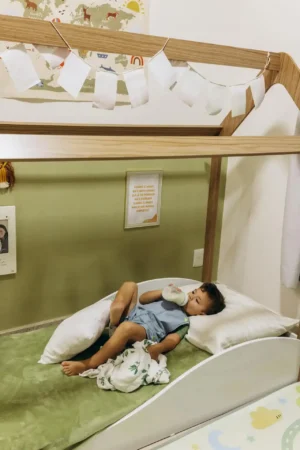
If you’ve ever whispered “Why are you still awake?” into the darkness while your toddler does parkour in their crib… same.
When I first started Creating Bedtime Routine for Toddlers in my house, I pictured something out of a cozy Pinterest board :
- Dim lights
- Sweet lullabies
- A sleepy toddler snuggled into my arms
Reality ?
My child was :
- Asking for “just one more” snack
- Suddenly “remembering” she was starving
- Needing to pee again
- And having a meltdown over the wrong pajamas
Meanwhile, I was exhausted, frustrated, and honestly wondering if I was doing something wrong.
If this sounds familiar, I promise you’re not alone. Toddlers are little humans with big feelings and zero filter, and bedtime can stir up all kinds of emotions—for them and us.
The good news? A calm, predictable bedtime routine really can help. It doesn’t have to be perfect. It doesn’t have to be fancy. But when you repeat the same simple steps night after night, it sends a powerful message to your toddler’s brain and body :
“It’s safe. It’s calm. It’s time to rest.”
In this post, we’ll walk through :
- Why bedtime routines matter
- How to build a realistic, toddler-friendly routine
- What to actually do in those 20–45 minutes before sleep
- How to handle stalling, tantrums, and “just one more story”
- When to reach out for help if bedtime is still a battle
Deep breath, mama. Let’s build a bedtime routine that works for your family. 💛
In this article : [+]
1. Why Bedtime Routines Matter (More Than We Think)
Before we build a routine, it helps to know why we’re doing it.
Toddlers are wired for :
- Repetition
- Predictability
- Connection
A bedtime routine is not just about getting them to sleep (though yes, that’s a big perk 😅). It’s also about :
- Signaling the brain and body that the day is ending
- Reducing anxiety by making nights feel safe and familiar
- Carving out connection time, which can reduce clinginess and drama
Think of your routine as a gentle slide into sleep, instead of a sudden “Okay, bedtime! Lights out!” cliff.
A simple, consistent bedtime routine can help your toddler :
- Fall asleep faster
- Wake up less often
- Feel more secure and calm at night
And yes, it can also help you feel more in control and less like every bedtime is a surprise boss battle.
2. Decide on Your Timing (And Protect It)
Most toddlers do well with a routine that starts 30–45 minutes before lights out.
How to choose bedtime :
- Look at what time they need to wake up
- Count backward by how many hours of sleep they need (most toddlers need around 11–14 hours in 24 hours, including naps)
- Pick a consistent bedtime window (for example, lights out between 7:30–8:00 p.m.)
You don’t have to hit the exact minute every night, but try to stay within roughly the same 30-minute range.
A real-life example
Let’s say :
- Your toddler wakes at 7:00 a.m.
- They nap 1.5–2 hours midday
- You’re aiming for around 11–12 hours total sleep
A bedtime in the 7:30–8:00 p.m. range might work well.
That means :
- Start the routine around 7:00–7:15 p.m.
Protect that routine time as much as possible. Life happens—late dinners, outings, visits—but in general, consistency beats perfection.
3. Build Your Routine : Simple Steps That Actually Work
You don’t need a 12-step spa-level routine. Think calm, repeatable, and realistic for your energy level.
Here’s a sample routine you can tweak for your family :
1. Transition & Wind-Down (5–10 minutes)
This is the “we’re shifting gears now” moment.
Ideas :
- Turn off loud TV/music
- Dim the lights in the living room
- Give a “10-minute warning” for toys (“In 10 minutes, we’re going to start bedtime.”)
This gentle heads-up can help reduce those “But I wasn’t ready!” meltdowns.
2. Bath or Wash-Up (10–15 minutes)
Not every child needs a bath every night, and that’s okay. Some families do :
- Full bath some nights
- Quick face/hands/wipe-down other nights
Warm water can :
- Relax muscles
- Feel like a clear “end-of-day” signal
If bath time usually turns into a wild splash zone, you can :
- Shorten it
- Make it earlier
- Or skip bath during especially tough evenings and just do a warm washcloth wipe.
3. Pajamas, Diaper/Potty, and Teeth (5–10 minutes)
This is the “get cozy” part :
- Fresh diaper or potty time
- Comfy pajamas
- Brushing teeth (yes, even when they protest 🙃)
Give simple choices here to avoid power struggles :
- “Do you want the dinosaur pajamas or the star pajamas?”
- “Do you want to brush teeth yourself first, or Mommy help first?”
Limited choices help toddlers feel in control while still keeping you in charge of the routine.
4. Quiet Connection Time (10–15 minutes)
Now we’re in the bedroom with the lights dimmed. This is your golden time for bonding.
Choose 1–3 calm activities, for example :
- Reading 1–2 short books
- Singing a lullaby
- Talking about your day (“What was your favorite part?”)
- Saying a simple prayer or gratitude list if that aligns with your family
Try to keep screens out of this part of the night—blue light and exciting shows can make it harder for toddlers to settle.
I like to think of this as “fill their emotional cup” time. When toddlers feel connected, they often have a much easier time separating for sleep.
5. Goodnight Ritual & Lights Out (2–5 minutes)
End with the same simple steps every night, like :
- Turn on white noise
- Turn off main light, turn on nightlight (if you use one)
- Say the same phrase:
- “Goodnight, I love you. I’ll see you in the morning.”
- Hugs, kisses, and then… leave the room
It might feel repetitive, but that’s the point. Toddlers find comfort in knowing exactly what comes next.
4. Use Choices (Without Giving Away All the Power)
One of the biggest sources of bedtime drama? Power struggles.
Toddlers are wired to test limits and explore independence. Bedtime is a prime time for :
- “No!”
- “I don’t want to!”
- “One more…”
We can reduce battles by offering controlled choices in the routine:
- Pajamas : “Stripes or hearts?”
- Books : “This one or this one?” (Hold up two.)
- Lullaby : “Twinkle Twinkle or ABC song?”
What we don’t want to make optional :
- Whether we brush teeth
- Whether it’s bedtime
- Whether we stay in bed (that’s the boundary)
Think :
“You must go to bed, but you may choose your cozy pajamas and which book we read.”
You’re still the loving leader, but your toddler gets to feel like an important part of the routine.
5. Create a Sleep-Friendly Environment
A calm room can make a huge difference.
Make the bedroom feel :
- Dark – Use blackout curtains if early morning light is waking them up.
- Quiet (or consistent sound) – White noise or a fan can help drown out household noise.
- Cool but comfortable – Slightly cooler rooms tend to support better sleep.
Comfort objects can help
For toddlers, it’s okay (and even helpful) to have :
- A favorite stuffed animal
- A small blanket
- A special pillow
These “lovies” can be powerful emotional anchors that say, “You’re safe. You’re okay. Sleep time now.”
6. Handling Stalling, Tantrums, and “Just One More…”
Even with the best routine, bedtime with toddlers is rarely perfectly smooth. Let’s talk about those classic challenges.
1. The Endless Requests
- “One more book!”
- “I need water!”
- “I have to potty again!”
What helps :
- Build these things into your routine :
- Offer a sip of water during story time
- Ask if they need one last potty trip before you tuck them in
- Use a simple phrase :
- “We already did our water and potty. Now it’s sleep time.”
Some parents like a “bedtime pass” system :
- The child gets one “pass” for an extra hug, question, or water sip
- When they use it, it’s gone for the night
It gives them a bit of control without opening the floodgates.
2. The Sudden Fears
Bedtime can stir up worries :
- Afraid of the dark
- Scared to be alone
- Imaginary monsters
What helps :
- Validate feelings : “I hear that you feel scared. That’s okay. Mommy’s here.”
- Offer real comfort, not dismissal: skip “There’s nothing to be scared of!” and try “You are safe in your bed. Let’s turn on your special nightlight.”
- Use a consistent routine plus a comfort object
If fears are intense or persistent, talk with your pediatrician for guidance.
3. The “Gets Wild Before Bed” Problem
Some toddlers seem to get more energetic right before bed. Often, that’s actually overtired hyper.
Try :
- Starting the wind-down a bit earlier
- Keeping pre-bed games very calm and low-energy
- Making sure they had enough physical activity earlier in the day
One small change (like moving bedtime 20 minutes earlier) can sometimes make a big difference.
7. Expert Insight : Why Routines Help Kids Sleep
Sleep experts and pediatric organizations often emphasize bedtime routines because they:
- Provide cues to the brain that sleep is coming
- Help regulate the body’s internal clock
- Reduce bedtime resistance and night wakings for many children
Gentle, consistent routines—especially those that include quiet, screen-free time and positive connection—are associated with better sleep quality and more total sleep in young children.
You don’t have to follow anyone else’s routine exactly. The magic is not in the specific steps—it’s in the calm repetition and connection.
8. When to Check In With Your Pediatrician
Even with a solid bedtime routine, some sleep issues are worth discussing with your child’s doctor, especially if :
- Your toddler snores loudly or regularly
- They seem to stop breathing or gasp in their sleep
- They are chronically overtired despite enough time in bed
- Sleep struggles are causing major stress for your family
Your pediatrician can :
- Check for underlying issues (like sleep apnea or reflux)
- Talk through age-appropriate expectations
- Refer you to a sleep specialist if needed
Reaching out for help is not a failure. It’s a sign that you’re a proactive, caring parent.
Gentle Encouragement : You’re Doing Better Than You Think
If bedtime at your house feels messy, loud, and far from picture-perfect, please know this:
- That doesn’t mean you’re doing it wrong.
- That doesn’t mean your child is “bad.”
- It just means you’re both human.
Creating a calm bedtime routine for toddlers is a process—not a switch you flip once and it’s done. There will be nights that are beautiful and cozy… and nights that are pure chaos despite your best efforts.
Focus on :
- Small, consistent steps
- Connection over perfection
- Progress over instant results
You and your toddler are learning together. And every story read, every song sung, every “I love you, goodnight” is building something beautiful in their little heart. 💛
You’ve got this, mama. Truly.
Let’s Share Bedtime Wins
Now I’d love to hear from you :
👉 What’s one thing that’s helped bedtime go smoother at your house?
Is it a favorite book, a silly routine, a specific lullaby, or a sleep-friendly trick you swear by?
Share your go-to bedtime tip in the comments—another tired mama might need it tonight.
And if this guide on Creating Bedtime Routine for Toddlers was helpful :
- Save or pin it so you can come back to it
- Share it with a friend who’s deep in toddler bedtime battles
- Join my email list for more cozy, judgment-free tips on toddler sleep, routines, and everyday mom life 💤🌙