
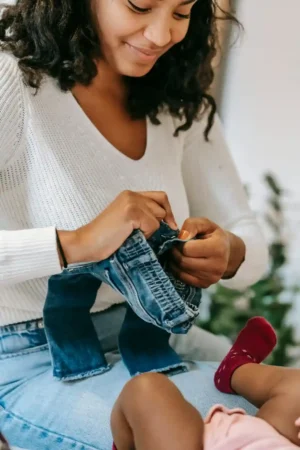
I still remember the morning my toddler decided she was going to “do it ALL by myself.”
We were already running late. I had my coffee in one hand, diaper bag in the other, and there she was… trying to put both legs into the same pant leg, getting stuck, and then absolutely losing it.
There were tears (hers), frustration (mine), and an inside voice whispering, “Why is something as simple as getting dressed so hard ?”
If you’ve ever watched your child meltdown over socks, refuse to brush their teeth, or run away the second you mention bath time, you’re not alone. Dressing and personal hygiene for kids can feel like a daily power struggle — especially when you’re tired and just need everyone out the door.
I’ve been there too, mama.
The good news ? These skills can become easier, more independent, and even (dare I say it)… a little fun. With small changes, realistic expectations, and lots of praise, you can help your child learn to dress themselves and take care of their body — without it turning into a battle every single day.
In this post, we’ll walk through simple, practical strategies to support Dressing and Personal Hygiene for Kids — from getting socks on the right feet to building healthy habits that will carry them into the school years and beyond.
Deep breath. You don’t have to fix everything overnight. Let’s take it one step (and one sock) at a time. 💛
In this article : [+]
Why Independence With Dressing and Hygiene Matters
Before we dive into the “how,” it helps to remember the “why.” These are not just chores to check off your daily list. They’re life skills.
When your child practices dressing and personal hygiene, they’re also :
- Building fine motor skills (buttons, zippers, snaps)
- Learning body awareness and coordination
- Developing confidence (“Look, I did it myself!”)
- Practicing responsibility and routines
- Gaining independence in a safe, supported way
It’s okay if it’s messy at first. Shirts might be backward. Shoes might be mismatched. Toothpaste might end up on the mirror. That’s all part of the learning.
Your job isn’t to make everything perfect — it’s to create space for practice, offer gentle guidance, and cheer them on.
Start With Dressing : Break It Into Simple, Doable Steps
If we really think about it, “getting dressed” is actually many small tasks stacked together. For little hands and growing brains, that’s a lot.
Instead of “Go get dressed,” try breaking it down :
- Pick clothes
- Put on underwear
- Put on shirt
- Put on pants
- Put on socks
- Put on shoes
How to Make Dressing Easier
1. Start with undressing
Undressing is usually easier than dressing. Let them practice :
- Taking off socks
- Pulling off a hat
- Tugging off pants
- Unzipping a jacket
This builds confidence and helps them understand how clothes move on their body.
2. Teach one skill at a time
Choose one thing to focus on for a week or two, like :
- Pulling up pants
- Putting arms through shirt sleeves
- Pulling socks onto toes
Once they’re comfortable, layer in the next step.
3. Use simple language and sequences
Instead of long explanations, try short cues :
- “Tag in the back.”
- “One foot, then the other.”
- “Arms in, head in, pull down.”
You can even turn it into a little chant. Toddlers love repetition.
Set Up the Environment So Kids Can Succeed
Sometimes, the problem isn’t your child — it’s the environment. A few small tweaks can make a huge difference.
Clothing Setup Tips
- Keep outfits in easy reach
Put everyday clothes in lower drawers or baskets so your child can grab what they need. - Pre-create outfits
Use small bins or labels like “Monday,” “Tuesday,” or group leggings + tops together to reduce decision overwhelm. - Choose “easy” clothing
Especially for younger kids, go for:- Elastic waistbands
- Velcro shoes
- Few buttons or snaps
- Soft, comfy fabrics
If they’re constantly fighting with stiff jeans and tricky zippers, they’ll get frustrated faster.
Use Visual Aids
A simple dressing chart with pictures can work wonders :
- Underwear
- Shirt
- Pants
- Socks
- Shoes
You can print icons or draw stick figures — it doesn’t have to be fancy. Hang it near their dresser so they can follow along without you needing to repeat every step.
Personal Hygiene Basics : Start Small, Build Slowly
Dressing and personal hygiene for kids go hand in hand. Once you’ve got a basic dressing routine, begin gently layering in hygiene habits.
Core Hygiene Skills for Young Kids
- Handwashing
- Teeth brushing
- Face washing
- Bathing (with help)
- Using the toilet and wiping (age-dependent)
Don’t try to master everything in a single week. Choose one or two to focus on and make them part of your daily rhythm.
Handwashing : Turn It Into a Tiny Ritual
We already talked a lot about toddler handwashing in another post, but here’s a quick recap for this topic.
Handwashing is one of the easiest ways to :
- Keep them healthy
- Teach responsibility
- Introduce simple hygiene routines
Make It Accessible
- Use a sturdy step stool
- Keep soap and a towel within reach
- Hang a small picture chart near the sink :
- Wet
- Soap
- Scrub
- Rinse
- Dry
Make It Fun
- Sing a 20-second song (ABCs, Happy Birthday, or your own “soapy song”)
- Use foaming or colored soap
- Give them a “handwashing job” like “clean the superhero hands!”
You’re not just teaching them to follow directions — you’re helping them build a habit that will stick.
Teeth Brushing : Teamwork First, Independence Later
Teeth brushing is one of those battles most parents know too well. Kids want independence, but they don’t yet have the coordination to brush well on their own.
A Simple Approach
1. You brush, then they brush
- Start by letting them “try first”
- Then say, “Okay, now it’s Mommy’s/Daddy’s turn to get the sugar bugs you missed.”
2. Use the right tools
- A soft, child-sized toothbrush
- Grain-of-rice amount of fluoride toothpaste for under 3
- Pea-sized amount for ages 3–6
3. Make it playful
- Use a two-minute timer or song
- Pretend you’re chasing “sugar bugs” or “cavity monsters”
- Let them practice on a stuffed animal first
And remember : most kids need help brushing until around 7–8 years old, even if they want to do it “all by myself.”
Bathing and Body Care : From Fight to Fun
Bath time can go either way — total joy or absolute chaos.
Keep Bath Time Safe and Simple
- Never leave your child unattended
- Use a non-slip mat
- Keep water warm, not hot
- Have everything (towel, pajamas, diaper/underwear) ready before you start
Encourage Independence in Small Ways
Let your child :
- Wash their belly, arms, or legs with a washcloth
- Pour water on their own feet or toys
- Choose which towel to use
You can say things like :
- “Your job is to wash your belly, I’ll do your hair.”
- “Can you soap your arms while I rinse your back?”
They feel involved and capable, but you’re still guiding the process.
Dressing and Hygiene Routines That Actually Stick
Kids thrive on predictable routines. Instead of nagging them fifteen times a day, build a routine they can rely on.
Morning Routine Example
- Use the toilet
- Wash hands
- Get dressed
- Brush teeth
- Brush hair
Evening Routine Example
- Bath or wash face/hands
- Pajamas
- Brush teeth
- Use the toilet
- Storytime & cuddles
You can turn these into a visual routine chart with pictures and let your child check off each step. Routine charts shift some of the responsibility onto the system, not just you reminding them over and over.
Gentle Ways to Handle Resistance and Meltdowns
Even with the best routine in the world, there will still be days your child refuses to put on pants or screams about brushing their teeth. That’s normal.
Here are a few tools that help :
1. Offer Limited Choices
- “Do you want the dinosaur shirt or the rainbow shirt?”
- “Should we brush teeth before or after we put on pajamas?”
Choices help them feel in control while you still set the boundaries.
2. Use When/Then Statements
- “When we’re done brushing teeth, then we can read a bedtime story.”
- “When you put on your socks, then we can go outside.”
Not a bribe — just linking responsibilities to things that are already part of the routine.
3. Validate Feelings
- “You really don’t feel like brushing teeth right now. I get it, you’re tired.”
- “You’re frustrated that your shirt is tricky. Let’s try together.”
You don’t have to agree to understand. Often, being seen and heard calms the storm.
4. Aim for Progress, Not Perfection
They put both socks on by themselves, but they’re inside out? That’s still a win.
Try saying :
- “You worked so hard on that!”
- “You did your socks all by yourself!”
You can tweak and fix things quietly later if needed.
Expert Insight : Why Routines and Independence Matter
Child development experts and pediatric occupational therapists often emphasize that self-care skills (like dressing and hygiene) are a huge part of early independence.
- Consistent routines help kids feel safe, secure, and confident.
- Practicing self-care is linked to improved fine motor skills, self-esteem, and even better cooperation in other areas (like school and social situations).
- Professional guidelines also recommend that parents introduce these skills gradually, with lots of modeling and positive reinforcement, rather than pressure or shaming.
You don’t need to be perfect or turn your home into a classroom. Simply :
- Model the habits
- Invite your child to participate
- Keep practicing in small, daily moments
If you ever feel your child is really struggling — for example, they’re much older and still can’t manage basic dressing or hygiene steps — it’s always okay to bring it up with your pediatrician. Sometimes an occupational therapist can offer extra support and strategies.
Older Kids and Growing Bodies : Keeping Conversations Open
As kids get older, dressing and personal hygiene become about more than just socks and toothbrushing. Their bodies start to change, and they need more information, not less.
For school-age kids, you might add :
- Daily deodorant once puberty begins
- Regular showers instead of occasional baths
- Washing their face to help prevent acne
- Changing underwear and socks daily
- Menstrual hygiene for girls when the time comes
Try to keep the tone :
- Open
- Non-judgmental
- Matter-of-fact
You can say things like :
- “Our bodies change as we grow, and hygiene is one way we take care of them.”
- “Everyone gets body odor, it’s totally normal. Deodorant just helps us stay fresh.”
You want them to feel comfortable asking questions, not embarrassed or ashamed.
Encouragement for Tired Parents (Yes, You)
If you’re reading this and thinking, “This sounds great, but my kid screams about socks every single morning,” please hear this :
You are not failing.
Kids don’t wake up one day magically knowing how to get dressed, brush teeth perfectly, wash their hands, and shower like tiny adults. These skills are learned slowly, with lots of repetition, reminders, and patience — for both of you.
Small, consistent steps matter :
- One new skill at a time
- One routine at a time
- One moment of praise at a time
There will be messy mornings and rushed evenings. There will be days where you just put the shirt on for them because you need to leave the house. That’s okay. It’s the overall pattern, not one hard day, that shapes your child’s habits.
Mama, you’re doing so much more than you realize. And your child is learning more than you think. 💛
Let’s Help Each Other
I’d love to hear from you!
- What’s the hardest part of Dressing and Personal Hygiene for Kids in your house right now?
- Do you have a favorite hack — a song, a routine, or a silly game — that makes things easier?
Share your tips and struggles in the comments — another mama might need exactly what you’ve figured out.
And if you’d like more cozy, realistic tips for raising little humans (without losing yourself in the process), make sure to join my email list. I send simple, mom-tested routines, checklists, and encouragement straight to your inbox. 🌿