
The first time I really started Googling Hand Strength Activities for Preschoolers, it was over a broken crayon and a very frustrated little human.
We were at the table with coloring pages, snacks, and what I thought would be a calm afternoon activity. Instead, my preschooler kept dropping the crayon, switching hands, or saying, “My hand’s tired,” after about 30 seconds. Meanwhile, her friend seemed to color for ages, filling in tiny shapes like it was nothing.
Cue the mom thoughts :
- “Is her hand not strong enough ?”
- “Did I not give her enough playdough as a toddler ?”
- “Will this make writing harder later ?”
I’ve been there too, mama—watching your child struggle with something that looks “simple” and wondering if you missed a step somewhere along the way.
Here’s the reassuring part: preschoolers are still building the muscles and coordination they need for writing, cutting, dressing, and other daily tasks. Hand strength doesn’t come from worksheets—it comes from play, squeezing, climbing, pouring, tearing, and all those messy little moments we sometimes underestimate.
In this post, we’ll walk through fun, low-pressure hand strength and coordination activities you can weave into everyday life—no complicated prep, no fancy equipment. Just real, practical ideas to help your child’s hands get stronger while they think they’re “just playing.” 💛
In this article : [+]
1. Why Hand Strength Matters (In Real Mom Language)
Strong little hands do more than just hold crayons. Hand strength and coordination help preschoolers :
- Use scissors safely
- Button, zip, and snap clothes
- Hold utensils and feed themselves
- Open snack containers and water bottles
- Draw, color, and eventually write
Occupational therapy resources explain that hand strength comes from both the intrinsic muscles (inside the hand) and larger muscles in the forearm that control grip. Activities like squeezing, pinching, tearing, and climbing all play a part in building those muscles.
The American Academy of Pediatrics also recommends lots of active, hands-on play in early childhood, instead of relying on screens, because that kind of play naturally supports fine motor and gross motor development.
The best part? You don’t need to drill your child with “exercises.” Almost everything that’s good for their hands can be wrapped inside fun and pretend play.
Let’s break it into three big buckets :
- Hand-strengthening play
- Hand–eye coordination games
- Big body (gross motor) moves that secretly support hand skills
2. Squish, Roll, and Pinch : Playdough Power
If I could only pick one thing for preschool hand strength, it would be playdough.
How to use playdough for hand strength
Sit with your child and :
- Roll “snakes” or “worms” between both hands
- Pinch little spikes on a pretend dinosaur or dragon
- Press beads, buttons, or coins into the dough and then dig them out
- Flatten “pancakes” and cut them with plastic knives or cookie cutters
All of these actions—squeezing, pushing, pinching—work the small muscles in the hands and fingers, which are crucial for a future pencil grip.
Mom tip
Turn it into pretend play :
- “Let’s open a bakery!” (roll, cut, decorate cookies)
- “Let’s make a pizza!” (pinch crust, add tiny toppings)
- “Let’s hide treasure!” (bury beads and dig them up like pirates)
Suddenly, it’s not “hand exercise”—it’s story time with dough.
3. Squeeze and Spray : Water and Sponge Games
Preschoolers love water. Let’s use it.
Ideas to try
- Spray bottle fun
- Use a spray bottle to “water” plants, clean toy cars, or spray chalk drawings outside.
- Squeezing the trigger builds grip strength and finger endurance.
- Sponge squeeze race
- Put two bowls on the table or outside—one with water, one empty.
- Have your child soak a sponge in water and squeeze it into the empty bowl.
- See how many squeezes it takes to fill the bowl.
- Bath time squeezers
- Use rubber bath toys, squeeze-bulb toys, or sponges in the tub.
These activities strengthen the hands and forearms while feeling like pure fun.
Mom moment
My child once spent 20 minutes “washing” our outdoor table with a spray bottle and a sponge. I got to sit in the shade and supervise, and she got a full hand-strength workout she begged to repeat later. I’m calling that a win.
4. Tear, Crumple, Clip : Paper and Clothespin Challenges
You do not need fancy crafts to build strong little hands.
Tearing and crumpling paper
- Give your child junk mail, old magazines, or colored paper.
- Show them how to tear strips, then tear the strips into tiny pieces.
- Let them crumple paper into tight balls with one hand at a time.
This builds finger strength and bilateral coordination (both hands working together).
Turn it into art :
- Make “snow” for a winter collage
- Glue tiny paper bits onto a shape (heart, star, animal)
Clothespin and clip games
- Use clothespins or chip clips on :
- The edge of a box
- A paper plate (turn it into a “porcupine”)
- A string (like a tiny clothesline)
Squeezing clothespins strengthens the pincer grasp (thumb + index finger), which is key for a mature pencil grip.
Mom tip
Keep a little “fine motor basket” with clothespins, scrap paper, and a glue stick. When you need 10 minutes to drink coffee or start dinner, pull it out and let your child “build muscles for big kid writing.”
5. Tongs, Tweezers, and Tiny Treasures
Tongs and tweezers are like little hand gym machines disguised as toys.
How to set it up
- Grab kid-safe tongs, plastic tweezers, or even chopsticks with a rubber band loop.
- Offer small items to pick up :
- Pom-poms
- Cotton balls
- Big beads
- Cereal pieces
Have your child :
- Sort items into muffin tins or ice cube trays
- Transfer from one bowl to another
- “Feed” a stuffed animal or toy monster (box with a mouth cut out)
These activities help kids practice a pinch-like grasp with precision, strengthening the muscles they’ll use later for holding a crayon or pencil.
Mom note
We call this “feeding the dragon” at our house. The dragon is a tissue box with eyes drawn on. My child uses tongs to feed it pom-poms, and I get at least 15 minutes of glorious, focused play.
6. Punch, Lace, and Stick : Coordination Boosters
Hand strength and coordination usually go hand in hand (pun intended). These activities are great for both :
Hole punching fun
- Use a single-hole punch on scrap paper or paper strips.
- Have your child punch along a line or make “confetti” for crafts.
Hole punching gives good resistance and works the whole hand.
Bead stringing and lacing cards
- Offer large beads and a shoelace or pipe cleaner.
- Start with stiff pipe cleaners (easier) and move to soft string as they improve.
- Lacing cards (cardboard with holes and a lace) are also great.
These build :
- Hand–eye coordination
- Bilateral coordination (one hand holds, one threads)
- Pincer and tripod grasps
Sticker play
- Use small stickers and have your child :
- Peel them from a sheet
- Place them on lines, shapes, or targets you draw
Peeling and placing stickers is surprisingly powerful for finger strength and precision.
7. Kitchen “Helpers” : Real-Life Hand Workouts
Some of the best hand strength activities for preschoolers happen right in the kitchen.
Simple cooking and baking tasks
Let your preschooler :
- Stir batter or pancake mix
- Knead dough or roll it with a rolling pin
- Peel a boiled egg or an easy-to-start orange (with your help)
- Pour water or juice from a small pitcher into cups
These tasks build :
- Grip strength
- Wrist stability
- Hand–eye coordination
Plus, they feel so proud to be “helping.”
Mom moment
Yes, it’s messier. Yes, it takes longer. But when I frame it as “you’re growing your big kid muscles,” my child beams—and I remember that this is the lesson, not a distraction from it.
8. Big Body Play That Supports Little Hands
It might sound strange, but strong hands start with a strong core, shoulders, and arms. When your child’s bigger muscles are stable, their hands can move with more control.
Climbing and hanging
- Playground climbing structures
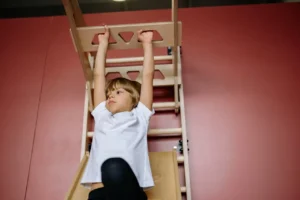
- Monkey bars (even just hanging for a few seconds with your support)
- Climbing small trees or safe rocks
These activities build overall upper body and grip strength.
Animal walks
Try :
- Bear walks : Hands and feet on the ground, hips up
- Crab walks : Hands and feet on the ground, tummy up, walking backward
- Frog jumps : Squat and jump forward
These movements put weight through the hands and wrists, which strengthens them and supports fine motor control later.
Tug-of-war and pushing/pulling
- Gentle tug-of-war with a towel or rope
- Pushing a weighted laundry basket, toy cart, or box
- Pulling a wagon with toys inside
These all add resistance, building grip and arm strength in a fun, playful way.
9. What Experts Say (Without the Jargon)
To keep it simple :
- Occupational therapy sources emphasize that play-based, hands-on activities like squeezing, tearing, climbing, and lacing are some of the best ways to build hand strength and coordination in young children.
- The CDC and pediatric organizations encourage parents to watch for developmental milestones and talk to their child’s doctor if they have concerns about fine motor or hand function.
If your child :
- Avoids using their hands
- Gets very tired quickly with simple tasks
- Struggles a lot with holding utensils, crayons, or basic play items
…it’s completely okay (and smart) to mention it at your next pediatrician visit. They can reassure you or refer you to an occupational therapist for more targeted help.
You’re not “overreacting.” You’re paying attention. That’s good parenting.
You’re Doing Better Than You Think (Encouragement & Support)
Mama, if you’re reading about Hand Strength Activities for Preschoolers because you’re worried your child’s hands “aren’t strong enough” or you’ve noticed they tire easily—you’re not alone. And you are not failing.
Every time you :
- Sit on the floor and roll playdough together
- Let them tear up old mail for a collage
- Hand them the spray bottle and say, “Can you water the flowers?”
- Cheer when they hang on the monkey bars for one more second
…you’re quietly, consistently helping them build the strength and coordination they need for writing, drawing, dressing, and more.
It doesn’t have to look like a perfect OT session. It can look like a messy kitchen, a wet patio, a table full of stickers, and a giggling kid who thinks they’re just playing.
Small, playful moments really do add up. And you’re already giving your child so many of them. 💛
Let’s Share Ideas
I’d love to hear from you :
👉 What’s one simple activity your preschooler loves that secretly works those little hand muscles—playdough, climbing, kitchen “helping”?
Share it in the comments—your idea might give another tired mama a fresh activity to try this week.
If you found these Hand Strength and Coordination Activities for Preschoolers helpful, feel free to save this post for later or share it with a friend. And if you’d like more cozy, judgment-free tips on development, routines, and mom life, you’re always welcome to join my email list for weekly encouragement and easy, real-life ideas. 💌