
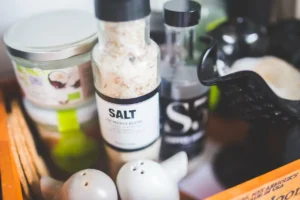
When my provider first said, “Let’s double-check your iodine during pregnancy,” I honestly blinked. I was already juggling folate, iron, DHA, and the eight million snacks my toddler discarded at my feet. Iodine felt like One More Thing. Did I really need to think about salt labels and seaweed? And how was I supposed to know if my prenatal even had iodine?
If that sounds familiar, big hug. I’ve been there, too. Here’s the good news: iodine is crucial for baby’s brain and nervous system, but meeting your needs can be simple and stress-free. Think: a prenatal that actually lists iodine, a pinch of iodized salt in home cooking, and a few smart foods you probably eat already (hi, dairy, eggs, and low-mercury fish). In this friendly guide, I’ll show you clear daily targets, what to put on your plate, what to watch out for (like kelp supplements), and how to keep it all manageable on real-life, mom-life days. You’ve got this—and I’ll walk beside you.
In this article : [+]
1) Why Iodine Matters (in mom-friendly terms)
Iodine helps your body make thyroid hormones, which support your metabolism and your baby’s brain, bones, and nervous system—especially in the first and second trimesters when baby relies on your thyroid hormones. Severe iodine deficiency is a leading preventable cause of intellectual disability worldwide, and even mild shortages in pregnancy have been linked to suboptimal cognitive outcomes in children.
Quick takeaway : Iodine isn’t “extra.” It’s a quiet essential that helps wire baby’s brain—and helps you feel your best.
2) How Much Iodine You Need (and when)
- Pregnancy: ~220 micrograms (mcg) per day (U.S. RDA).
- Breastfeeding: ~290 mcg per day.
- Upper limit (UL): 1,100 mcg/day for adults, including pregnancy—so more is not better.
If you’re reading international guidance, you might see a total daily goal closer to 250 mcg used in global settings; the World Health Organization also recommends supplementation in regions where iodized salt coverage is low. The practical point for most of us: aim for the RDA, and use a prenatal + food plan that reliably gets you there.
3) Where to Get Iodine (simple, doable sources)
A) Check your prenatal label (seriously—flip the bottle)
Major organizations—including the American Thyroid Association (ATA) and the American Academy of Pediatrics (AAP)—recommend a daily prenatal with 150 mcg of iodine (often as potassium iodide) for women who are planning pregnancy, are pregnant, or breastfeeding. Not all prenatals include iodine, so the label check really matters.
Real talk : A survey found only about 58% of U.S. prenatal multivitamins contained iodine. If yours doesn’t list iodine, ask your provider about switching or adding a separate iodine supplement.
B) Add food sources you enjoy
- Iodized salt (for home cooking): use a light sprinkle to season—no need to oversalt. Heads-up: processed foods usually don’t use iodized salt, so restaurant/packaged food won’t reliably cover your needs.
- Dairy (milk, yogurt, cheese) and eggs are steady contributors in the U.S. diet.
- Seafood (like cod and shrimp) can be excellent sources—choose low-mercury options and aim for 8–12 oz per week during pregnancy.
Plant-based? Many plant milks are not fortified with iodine (varies by brand/country), so please check labels and talk with your provider about supplement needs.
4) Your No-Stress Iodine Plan (8 practical, mom-tested tips)
1. Make 150 mcg your “label anchor”
When shopping for a prenatal or multivitamin, look for “Iodine 150 mcg (as potassium iodide)” on the supplement facts panel. If it’s missing or listed as “kelp,” ask your provider for guidance—kelp can wildly vary in iodine content.
2. Season with iodized (not fancy) salt at home
Grab a canister that literally says “iodized salt.” Use just enough to make food taste good—iodized salt is a delivery system, not an invitation to overdo sodium. Most packaged/restaurant foods use non-iodized salt, so your home sprinkle matters.
3. Keep easy iodine wins in rotation
- A cup of milk or yogurt
- An egg at breakfast
- A shrimp or cod dinner once this week
- A dash of iodized salt while cooking
Tiny choices stack up fast.
4) Choose smart seafood (and enjoy it!)
Pregnant and breastfeeding women are advised to eat 8–12 oz/week of a variety of low-mercury fish—think salmon, sardines, shrimp, pollock, trout, cod, and light canned tuna (not albacore). Fully cook seafood and keep sushi to cooked options for safety.
5. Go easy on seaweed & skip kelp supplements
Seaweed can be very high in iodine (especially brown seaweeds like kelp/kombu), and content varies a lot. Many experts advise avoiding kelp supplements and limiting high-iodine seaweed in pregnancy to prevent overshooting your needs.
6. Don’t fear broccoli (goitrogens in context)
Cruciferous veggies and soy contain goitrogens that can interfere with iodine use if iodine intake is low. If you’re getting enough iodine, normal amounts are fine—so please keep those veggies on your plate.
7. Vegetarian or dairy-free? Plan with intention
If you avoid dairy/eggs and don’t eat fish, it’s even more important to use iodized salt, check plant-milk labels for iodine, and confirm your prenatal provides 150 mcg. A quick chat with your provider can personalize a plan that fits your values and your needs.
8. Know the limits (because more isn’t better)
Stay near the RDA (220 mcg in pregnancy) and don’t exceed the UL of 1,100 mcg/day unless your clinician specifically advises it for a medical reason. Too much iodine can also affect thyroid function—for you and baby.
5) A Simple 1-Day Iodine Menu (mix & match)
- Breakfast : Greek yogurt parfait with berries + granola; or scrambled eggs on whole-grain toast (cook with a pinch of iodized salt).
- Snack : Apple slices with peanut butter; or cheese cubes and whole-grain crackers.
- Lunch : Tuna (light) or salmon salad sandwich, crunchy veggies, and fruit; vegetarian option : egg salad or fortified plant-milk smoothie (check iodine on label).
- Snack : Cottage cheese with pineapple; or hummus + veggies + a sprinkle of iodized salt on warm pita.
- Dinner : Shrimp + veggie stir-fry over rice; or baked cod with potatoes and roasted broccoli (seasoned with iodized salt).
Paired with a prenatal that lists 150 mcg iodine, you’re well on your way to the RDA—without micromanaging every bite.
6) Troubleshooting (because real life happens)
“My prenatal doesn’t list iodine—now what?”
You’re not alone. Many U.S. prenatals still omit it. Ask your provider about switching to one that includes 150 mcg or adding a separate iodine supplement (usually potassium iodide) to meet your total daily needs.
“We mostly eat out—am I covered?”
Probably not from salt alone. Processed/restaurant foods typically use non-iodized salt, so keep relying on your prenatal and add home-cooked, lightly iodized meals when you can.
“I cook with sea salt or Himalayan salt.”
Most specialty salts are not iodized. They’re pretty, but they don’t help your iodine goal unless fortified (the label will say so).
“Is seaweed a great iodine hack?”
It can overshoot quickly. Enjoy seaweed in moderation and avoid kelp supplements unless your clinician specifically advises them.
“I have a thyroid condition.”
Please work closely with your provider. Iodine needs and tolerances can be different if you have hypothyroidism, hyperthyroidism, or are on thyroid meds. (All the more reason to choose measured 150 mcg in a prenatal rather than kelp products.)
7) Quick Label Guide (save this)
- Look for : “Iodine 150 mcg (as potassium iodide)” in your prenatal.
- Avoid relying on: Kelp/seaweed supplements (variable, often high).
- Food + prenatal combo : Shoot for the RDA (220 mcg) in pregnancy; 290 mcg while breastfeeding.
- Seafood : Choose low-mercury fish 8–12 oz/week.
- Salt : Use iodized at home; processed foods are generally non-iodized.
8) Expert Insight
- “Take 150 mcg iodine daily in a prenatal.” The ATA and AAP recommend that women planning pregnancy, pregnant, or breastfeeding take a 150 mcg iodine supplement—most commonly as potassium iodide—because diet alone may not be enough. CDC.
- “Not all prenatals include iodine.” U.S. surveys show many prenatal multivitamins still omit iodine; checking the label matters. American Thyroid Association.
- “Meet the RDA, don’t exceed the UL.” Pregnant adults need ~220 mcg/day, breastfeeding ~290 mcg/day, and should stay below 1,100 mcg/day unless medically directed. Office of Dietary Supplements.
- “Seafood, yes—smartly.” Enjoy 8–12 oz/week of low-mercury fish for iodine and other nutrients; fully cook seafood during pregnancy. U.S. Food and Drug Administration.
9) Wrapping Up with Love & Support)
Mama, you don’t need a perfect iodine spreadsheet—you just need a steady rhythm. A prenatal with 150 mcg, a light sprinkle of iodized salt at home, a cup of yogurt here, a shrimp or cod dinner there… and you’re supporting baby’s beautiful brain with ease. On tough weeks, choose one iodine win—an egg at breakfast, a yogurt snack, or a fish dinner—and call it success. You’re doing an amazing job. Truly. 💛
What’s your easiest iodine win—iodized-salt home cooking, a weekly shrimp stir-fry, or a simple yogurt-and-fruit snack? Share your go-to in the comments (another mama will thank you!). Want my printable “Iodine During Pregnancy: Daily Checklist & Food Guide”? Drop your email and I’ll send it right over.