
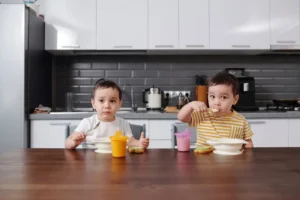
If there’s one universal truth of mom life, it’s this :
You can spend all morning planning breakfast, washing dishes, and wiping crumbs…
and 20 minutes later a tiny human will appear in the kitchen asking:
“Mama, I’m huuunggry. I want a snaaack.”
I remember one afternoon when my child had already had breakfast, a morning snack, and half of my lunch… and there she was again, standing in front of the fridge like a mini food critic.
I opened the door and just stared.
So many options—and somehow nothing felt like a “good” snack.
- I didn’t want to hand her cookies every time.
- I didn’t want to cut fruit for the millionth time and then watch it get ignored.
- And I definitely didn’t want to spend 30 minutes cooking something “snack-ish.”
I kept googling Snack Ideas for Toddlers and Preschoolers but everything either looked way too fancy… or way too unrealistic for a busy, tired mom who’s just trying to keep everyone alive and somewhat nourished.
If that’s you too, you’re not alone. 💛
The good news ? Snacks don’t need to be Pinterest-perfect.
They just need to b e:
- Simple
- Balanced (most of the time)
- Safe
- And realistic for your life
In this post, we’ll walk through :
- What makes a healthy snack for little ones
- Easy snack formulas you can mix and match
- Practical snack ideas using normal, everyday foods
- Safety tips (especially for choking hazards)
- How to use snacks without turning your day into an endless graze-fest
Let’s make snack time a little easier—and a lot less stressful.
In this article : [+]
1. What Makes a “Good” Snack for Toddlers and Preschoolers?
You don’t need to count every gram of protein or memorize nutritional charts. Think simple:
Most of the time, a great snack = 2 food groups together.
For example :
- Fruit + protein
- Veggie + dip
- Whole grain + dairy
Pediatric nutrition resources (like HealthyChildren.org from the American Academy of Pediatrics and MyPlate) recommend offering nutrient-dense snacks—things that actually fuel your child’s body, not just fill them up for five minutes. These include fruits, vegetables, whole grains, lean proteins, and dairy.
Snacks are also a golden opportunity to :
- Offer variety
- Re-introduce foods your child didn’t love at mealtime
- Give them steady energy between meals
So instead of thinking “small treat,” think :
“Mini meal with a job to do.”
2. Snack Safety 101 (Quick but Important)
Before we jump into snack ideas, a quick word on safety—especially choking hazards.
Organizations like the AAP and CDC emphasize that children under 4 are at higher risk for choking, and certain foods need to be modified or avoided.
General Safety Tips
- Make sure your child is sitting down while eating (no running around with food).
- Keep snacks at the table or a designated eating spot when possible.
- Always supervise while they’re eating.
Foods to Modify Carefully
- Grapes, cherry tomatoes, and other round foods :
- Cut lengthwise, then into quarters for toddlers.
- Hot dogs :
- Slice lengthwise, then into small pieces.
- Raw hard veggies (like carrots) :
- Serve steamed/soft or finely shredded for younger kids.
Foods Often Avoided for Under 4s
- Whole nuts
- Popcorn
- Hard candies, gum
- Large globs of nut butter
For nut butters, use a thin spread on bread, crackers, or fruit slices instead of spoonfuls.
Okay, safety chat done. Let’s get to the yummy part. 😋
3. Easy Fruit & Veggie Snack Ideas
Fruits and veggies are snack superheroes: full of vitamins, fiber, and natural sweetness.
3.1 Fresh Fruit Ideas
Keep it simple and soft :
- Banana coins
- Just peel and slice; easy for little hands.
- Peeled soft pear or peach slices
- Ripe mango cubes
- Halved or quartered grapes (for safety)
- Thinly sliced apple
- Pair with a little cheese or thin nut butter for more staying power.
- Clementine segments
- Easy to peel and naturally toddler-sized.
You can pair any of these with :
- A small handful of whole-grain cereal
- A cheese stick
- A spoonful of yogurt
3.2 Veggie Snack Ideas
Veggies can be trickier, but snack time is a great chance to offer them in low-pressure ways.
Cooked (softer) veggies :
- Steamed carrot sticks
- Soft broccoli florets
- Roasted sweet potato cubes
- Steamed green beans
Raw veggies for older toddlers/preschoolers :
- Cucumber sticks
- Bell pepper strips
- Cherry tomatoes (quartered)
And of course, the magic trick :
Dips. Lots of dips.
Try :
- Hummus
- Yogurt-based ranch
- Guacamole
- Cream cheese or cottage cheese as a “dip” or spread
Even if they mostly lick off the dip at first, it’s still exposure. They’re touching, smelling, and sometimes accidentally tasting the veggie underneath.
4. Protein & Dairy Snack Ideas (For Longer-Lasting Energy)
Pairing fruit or carbs with protein or fat helps toddlers stay full longer and keeps energy more stable.
4.1 Dairy Options
- Cheese sticks, slices, or cubes
- Great with apple slices, whole-grain crackers, or cucumber sticks.
- Yogurt
- Try plain or low-sugar yogurt and add :
- Fresh berries
- Banana slices
- A sprinkle of oatmeal or crushed whole-grain cereal
- Try plain or low-sugar yogurt and add :
- Cottage cheese
- Mix with pineapple bits, peaches, or berries.
4.2 Protein-Rich Snacks
- Hard-boiled egg
- Peel and cut into quarters or strips.
- Scrambled egg “muffin” pieces
- Leftovers from breakfast make an easy snack.
- Beans
- Rinsed canned chickpeas, black beans, or kidney beans.
- You can serve them plain, lightly mashed, or tossed with a bit of olive oil and mild seasoning.
- Edamame (shelled)
- Fun for older toddlers/preschoolers to pop into their mouths.
4.3 Nut and Seed Butters
For older toddlers (and if there’s no allergy and your pediatrician says it’s okay):
- Thin spread of peanut butter or almond butter on :
- Whole-grain toast
- Apple slices
- Banana slices
- Mini rice cakes
Always :
- Spread thinly
- Avoid spoonfuls of thick nut butter
These options help provide healthy fats and some protein, which are great for growing brains and bodies.
5. Whole Grain Snack Ideas
Whole grains give toddlers energy plus fiber to keep them satisfied.
5.1 Simple Whole-Grain Staples
- Whole-grain crackers
- Pair with cheese, hummus, or nut butter.
- Mini whole wheat pita or tortilla
- Cut into wedges; serve with hummus, beans, or guacamole.
- Whole-grain cereal
- O-shaped or puffed cereals can be offered dry in a bowl or snack cup.
- Mini whole wheat bagels or English muffins
- Top with cream cheese, mashed avocado, or thin nut butter and sliced banana.
5.2 Homemade-ish Baked Options
If you like baking (or buying better-for-you baked goods) :
- Mini muffins
- Banana oat muffins
- Zucchini or carrot muffins
- Pumpkin muffins
Look for or use recipes that :
- Are lower in added sugar
- Include fruit/veggies or whole grains
I’ve done many “lazy mom hacks” like :
- Buying a decent store-bought muffin and cutting it in half
- Pairing it with fruit and yogurt to make it more balanced
No guilt. We’re going for real life here, not perfection.
6. Snack “Formulas” You Can Mix and Match
To make snack planning easier, use mix-and-match formulas instead of exact recipes.
Here are some easy combos.
6.1 Fruit + Protein
- Banana slices + peanut butter (thin spread)
- Apple slices + cheese
- Grapes (quartered) + cottage cheese
- Berries + yogurt
6.2 Veggie + Dip
- Cucumber sticks + hummus
- Steamed carrot sticks + yogurt ranch
- Bell pepper strips + guacamole
- Soft broccoli florets + cheese dip or hummus
6.3 Grain + Protein/Dairy
- Whole-grain crackers + cheese
- Toast strip + mashed avocado
- Mini pita + hummus
- Whole-grain cereal + milk or yogurt
6.4 “Snack Plate” or “Mini Bento Box”
Sometimes I just :
- Grab a little of this, a little of that
- Put it on a plate or in a muffin tin
- Call it a “snack picnic”
For example :
- A few crackers
- A handful of blueberries
- A cheese cube or two
- A couple of cucumber sticks
Toddlers love options and variety, and this lets you clear out bits from the fridge too.
7. Snacks and Routine : Avoiding the All-Day Grazing Trap
Snacks are great—but when they turn into all-day munching, kids are often too full to eat real meals.
Pediatric nutrition guidance suggests offering scheduled meals and snacks instead of constant grazing. This helps toddlers learn hunger/fullness cues and arrive at the table actually ready to eat.
A Simple Rhythm
You might aim for something like :
- Breakfast
- Morning snack
- Lunch
- Afternoon snack
- Dinner
If they ask for a snack 20 minutes after lunch, you can gently say :
“We just ate lunch. Our next snack will be this afternoon. You can have some water now.”
You’re not being mean. You’re giving structure, which actually helps them feel safe and learn to listen to their bodies.
8. Picky Eaters : Using Snacks as Low-Pressure Practice
If your child is picky, snacks can be a helpful place to offer tiny exposures to new foods.
A few ideas :
- Include one “safe” snack food they usually eat + a tiny portion of something new.
- Use dips as a bridge (e.g., carrots with the same hummus they love on crackers).
- Put a new food on the plate but don’t comment on whether they eat it.
Remember :
It can take 10–15 (or more) low-pressure exposures before a child accepts a new food.
Snack time doesn’t have to be “try this or else.” Think :
“Here’s something new hanging out on the plate with your favorites. You don’t have to eat it, but it’s there if you’re curious.”
9. Expert Insight : What the Pros Say About Healthy Snacks
Child nutrition experts like the American Academy of Pediatrics and USDA MyPlate for Kids tend to agree on a few key points :
- Snacks should mostly be nutrient-dense, not just empty calories.
- Offer variety across the day and week.
- Avoid or limit sugary drinks and high-sugar packaged snacks.
- Practice choking prevention with appropriate food shapes and sizes.
- Use snacks as part of a structure, not an all-day buffet.
And most importantly—
Look at the big picture. If most snacks and meals over the week include fruits, veggies, grains, protein, and dairy, you’re doing really well.
You’re Doing Better Than You Think (Encouragement & Support)
If you’re feeling snack burnout, please hear this :
You do not need to reinvent snacks every day.
You do not need to cut every piece of fruit into adorable animal shapes.
And you do not need to be the perfect “Pinterest snack mom” to be a great mom.
Offering simple, balanced snacks—most of the time—is enough.
Some days it’ll be :
- Apple slices and cheese.
Other days it might be :
- A store-bought granola bar and a banana on the go.
It all counts. Kids don’t need perfect; they need good enough, consistently—and a mom who cares (which you clearly do).
You’re learning, they’re learning, and you’re building habits that will serve them for years.
Deep breath, mama. You’ve got this. 💛
Let’s Share Snack Inspiration
I’d love to hear from you :
👉 What are your go-to Snack Ideas for Toddlers and Preschoolers?
Is there one snack your child always says “yes” to—or a fun idea that surprised you?
Share it in the comments—your idea might save another mama on a busy afternoon.
If this post gave you a few new snack ideas (or just made you feel less alone in the never-ending snack cycle), feel free to :
- Save or pin it for later
- Share it with a friend who’s also living the “snacks every 10 minutes” life
- Join my email list for more cozy, realistic tips on feeding kids, development, and mom life
Snack time doesn’t have to be perfect. It just needs you—showing up, doing your best, one little plate at a time. 🥑🍓🥨