
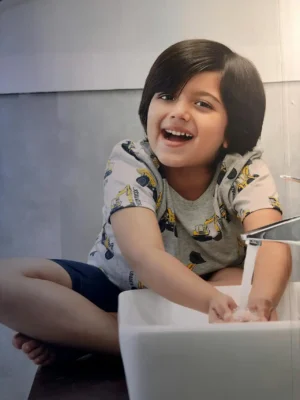
I still remember the first time I tried to do “proper” toddlers handwashing with my little one. We’d just come in from the playground, there was dirt in places I didn’t even know dirt could reach, and I cheerfully said, “Okay, let’s wash our hands !”
What followed ?
A full performance :
- One sock mysteriously removed
- Water turned on full blast
- Soap squeezed everywhere except on the hands
- And then, of course, “Nooooo, I don’t wanna wash my hands !”
By the time we were done, the bathroom looked like a tiny hurricane had passed through, and I was wondering if it was really worth it.
If you’ve ever felt like that too, you are so not alone. Teaching toddlers anything that requires patience and repetition can feel like climbing a mountain in flip-flops. But handwashing is one of those small daily habits that truly makes a big difference for their health (and the whole family’s).
The good news ? With the right approach, you can turn handwashing from a power struggle into a simple, fun routine your toddler actually enjoys—and can eventually do independently.
Today, I’ll walk you through exactly how to do that : step-by-step, with realistic tips, fun ideas, and plenty of grace for the messy moments in between.
In this article : [+]
1. Why Handwashing Matters (Even When It Feels Like “Not a Big Deal”)
It’s tempting to skip handwashing when everyone’s tired and hungry. But little hands touch everything: floors, toys, shoes, noses, and… who knows what else.
Proper handwashing helps :
- Reduce the spread of common illnesses like colds, stomach bugs, and flu
- Protect younger siblings or more vulnerable family members
- Teach your child an important life skill they’ll use forever
Health organizations around the world emphasize that simple handwashing with soap and water is one of the most effective ways to prevent infection. It’s low-cost, low-effort (once it becomes a habit), and super powerful.
So even when it feels like “one more thing” in a busy day, remind yourself: this small ritual really does matter.
2. Toddler-Friendly Steps : Breaking Handwashing Into Simple Actions
For us, “wash your hands” is one instruction. For a toddler, it’s actually a whole sequence of skills. Breaking it into simple, repeatable steps helps them feel confident instead of overwhelmed.
You can teach it as a little rhyme or chant :
- Wet – Turn on the water and get hands wet
- Soap – One small pump of soap (you can say “just a pea-sized drop!”)
- Scrub – Rub, rub, rub (tops, palms, between fingers, thumbs)
- Rinse – Rinse off all the bubbles
- Dry – Use a clean towel
You can even add fun visuals :
- A little picture chart above the sink with icons for each step
- Hand motions or a song to match (more on that next!)
A quick realistic tip
At first, you’ll basically be doing most of this with them: guiding their hands, turning the faucet on/off, reminding them of the order. That’s okay. Independence comes after lots of repetition.
3. Make It Fun : Songs, Games, and “Magic” Germ Experiments
If we want toddlers to do something consistently, it helps so much if it feels like play instead of a chore.
Here are some fun ways to make handwashing more appealing :
3.1. Sing a Handwashing Song
Toddlers are much more likely to scrub for long enough when it’s attached to a song. Aim for about 20 seconds of scrubbing time. You can use :
- “Happy Birthday” (sung twice)
- The ABC song
- “Twinkle, Twinkle Little Star”
- Or your own silly handwashing song
For example :
“Scrub, scrub, scrub your hands,
Make them nice and clean,
Front and back and in between,
Bye-bye germs, you’re not on my team!”
My own kiddo once started singing loudly, “Germs go down the draaaain!” and honestly, that became our thing.
3.2. Use Fun Soap
Little touches help :
- Foaming soap that “puffs”
- A pump bottle with their favorite character
- Colorful soap (as long as it’s gentle on their skin)
Sometimes I’ll say, “Let’s see the rainbow bubbles!” and that’s enough to get them on board.
3.3. Glitter or Cocoa Powder “Germ” Experiment
On a calm day (not when you’re rushing out the door!), try this :
- Sprinkle a bit of glitter or cocoa powder on their hands and say,
“These are pretend germs.” - Let them rub their hands on a toy or table so they can see how germs spread.
- Then wash hands with just water… and show how the “germs” stay.
- Add soap and wash again to see how much better the “germs” disappear.
It makes the “why” behind handwashing so much easier to understand.
4. Set Up a Toddler-Friendly Handwashing Station
If the sink area is built for adults, handwashing becomes frustrating for toddlers. A few simple changes can make a huge difference.
4.1. Use a Safe Step Stool
A sturdy step stool (with non-slip feet) lets them :
- Reach the faucet
- See themselves in the mirror
- Feel more independent
You can even call it their “helper tower” or “handwashing step.”
4.2. Keep Supplies Within Reach
Make sure your toddler can reach :
- The soap pump
- A clean towel or washcloth
- A little hook for their towel, at toddler height
When things are at their level, they’re more likely to join in instead of resisting.
4.3. Add a Visual Chart
A simple picture chart near the sink can show :
- Wet 💧
- Soap 🧴
- Scrub 👐
- Rinse 🚿
- Dry 🧺
You can print one, draw one, or even let your child decorate it with stickers. This helps them remember the steps without constant nagging from us.
5. Build a Routine : When Should Toddlers Wash Their Hands?
Consistency is what turns handwashing from “something Mom nags about” into “just what we do.”
Here are the key times to build into your daily rhythm :
- Before eating meals or snacks
- After using the potty or diaper changes
- After playing outside
- After touching pets or animals
- After coughing, sneezing, or blowing their nose
- Whenever hands look visibly dirty
You don’t have to give a whole lecture each time. A simple phrase like :
- “We always wash before we eat.”
- “Potty, flush, wash hands!”
- “Outside play is done, now we wash away the dirt.”
Over time, they’ll start repeating these lines back to you—and even reminding you sometimes (“Mom, you forgot to wash your hands!”).
6. Handling Resistance : “No, I Don’t Want To!”
Ah yes, the toddler classic. Even if they know the routine, there will be days when your child flat-out refuses. This doesn’t mean you’re doing it wrong. It just means… you have a toddler.
Here are some gentle strategies that help :
6.1. Stay Calm and Matter-of-Fact
Instead of turning it into a big negotiation, try :
“I hear you don’t feel like washing hands. We still need to wash before snack. Do you want to jump like a frog to the sink or tiptoe like a mouse?”
You’re holding the boundary (“we wash hands”), but offering choices around how it happens.
6.2. Use Limited Choices
Toddlers love feeling in control. You can offer small choices like :
- “Blue towel or yellow towel ?”
- “Pump the soap yourself or should I do it ?”
- “Do we sing the ABCs or the germs song ?”
They’re still washing hands, but now they feel like part of the decision-making.
6.3. Make It Part of the Activity
Connecting handwashing to what comes next helps :
- “When we finish washing hands, we’ll have snack.”
- “After we wash hands, we can read your favorite book.”
Not as a bribe, but as a natural next step in the routine.
7. Teach, Don’t Perfect : Let Them Practice (Even If It’s Messy)
At first, your toddler’s version of handwashing might be… interesting :
- Very quick “splash and dash”
- Soap only on wrists
- Towel soaking wet afterward
It’s okay. This is practice.
7.1. Guide Their Hands
In the early stages, you can gently take their hands in yours :
- “Let’s wash the backs of your hands… now your thumbs… now between your fingers.”
You’re teaching them what “thorough” feels like.
7.2. Praise the Effort
Focus on the effort, not perfection :
- “I love how you’re scrubbing between your fingers!”
- “You remembered to use soap all by yourself!”
- “Great job staying at the sink until the song was over.”
This builds confidence and keeps handwashing from feeling like a test they can fail.
8. Expert Insight : Why 20 Seconds and Soap Really Matter
Health experts like the CDC explain that proper handwashing with soap and water is one of the best ways to prevent the spread of germs that cause diarrhea, respiratory illnesses, and other infections.
Two key pieces :
- Time: Around 20 seconds of scrubbing gives the soap enough time to break down oils and germs on the skin.
- Soap: Plain water alone doesn’t lift and remove germs as effectively. Soap helps loosen them so they can be rinsed away.
You don’t need to share all the science with your toddler, but you can feel reassured that those little routines really are doing something powerful in the background.
9. Common Handwashing Mistakes (That Are Totally Fixable)
No guilt here—just some gentle reminders that help you fine-tune your routine.
9.1. Doing It All For Them
It’s often faster to just grab their hands and rush through it, especially when everyone is hungry or late. But giving them time to try it themselves (even imperfectly) builds independence and habit.
Try a “you then me” approach :
- “You scrub first, then I’ll check and do a mommy wash.”
9.2. Rushing the Scrub
Toddlers love to do the quickest possible version of everything. That’s why songs or timers are so helpful. Instead of constantly saying “Longer, longer,” let the song be the rule.
9.3. Only Using Hand Sanitizer
Hand sanitizer is handy (especially when you’re out), but for everyday life at home, soap and water is usually the better option—especially when hands are visibly dirty.
Sanitizer is great as a backup, not a full replacement. And remember to keep sanitizer well out of reach when you’re not supervising.
9.4. Expecting Perfect Compliance Every Time
Even with the best routines, there will be days when :
- They’re overtired
- They’re in a mood
- You’re in a mood
If one handwashing session is a total flop, it does not undo all your progress. Keep the big picture in mind: you’re building a long-term habit, not grading each individual wash.
10. Turning Handwashing Into a Lifelong Healthy Habit
The goal isn’t just “clean hands today.” It’s helping your child grow up thinking :
“Of course I wash my hands before I eat. That’s just what we do.”
To support that mindset :
- Make handwashing normal, not scary
- Keep your tone light and calm, even when you’re firm
- Give lots of praise when they remember on their own
- Model it yourself—kids notice when we skip it, too!
One day, you’ll hear them tell a sibling or friend:
“Wait, we have to wash our hands first.”
And you’ll know : okay, this stuck.
Encouragement for Tired Moms
Mama, if toddlers handwashing feels like one more exhausting thing on a never-ending list, I see you. You’re juggling meals, sleep, tantrums, laundry, and a million invisible tasks—and still trying to raise a kind, healthy little human.
You don’t have to get it perfect.
Every time you pause to say, “Let’s wash our hands,”
every silly song you sing over the sink,
every tiny moment you spend guiding those little fingers—
It all adds up.
You’re not just teaching hygiene. You’re teaching care.
Care for their body. Care for others.And care for shared spaces.
Small habits, big impact. You’re doing better than you think. 💛
Share Your Handwashing Hacks
I’d love to hear from you !
- Do you have a favorite handwashing song your toddler loves ?
- Any genius hacks that made handwashing easier (or at least less messy) ?
Share your tips and stories in the comments—another tired mama might really need your idea today.
And if you found this helpful, save it for later or share it with a friend who’s in the middle of sticky, messy, toddler life right now. We’re all in this together. 💕