
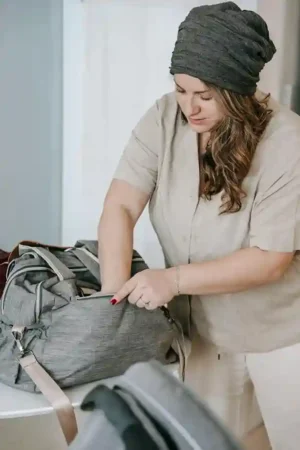
I remember staring at my half-open suitcase the week before my due date, wondering if I needed…everything. “What to pack in a hospital bag” felt like such a simple question, but every list online seemed either way too minimal (just a toothbrush?!) or a full-on vacation packing guide. I tossed in three outfits for baby, then took two out. I added a curling iron (did I think I was going to a wedding?) and then laughed and put it back.
When we finally headed to the hospital, I was grateful for the things that made a big difference: the long charger, my cozy robe, a few favorite snacks for my partner, and one soft swaddle for those first photos. I’ve been there, friend. Packing doesn’t have to be overwhelming. This guide gives you a clear, doable plan for what to pack in a hospital bag—for you, your support person, and your newborn—plus what most hospitals provide and what you can confidently leave at home. Let’s keep it simple and calm, so you can focus on the main event: meeting your baby. 💛
In this article : [+]
How to Use This Guide (and When to Pack)
- When to pack : Start a small “ready bag” by 34–35 weeks, and aim to finish everything by 37 weeks (earlier if you’re expecting multiples or have a history of early labor).
- How to organize : Think three mini-bags inside one tote or suitcase:
- Labor & delivery (easy to grab),
- Postpartum & going home,
- Baby + car seat.
- Personal note : I put the labor bag on top so the nurse didn’t have to go treasure-hunting for my chapstick and hair ties in the first 10 minutes.
1) Labor & Delivery Essentials (For You)
These are the items you’ll be happy to have within arm’s reach in the first hours.
- ID, insurance card, and any hospital paperwork (keep them together in a clear pouch).
- Birth plan/preferences (one page is perfect).
- Comfort layers : soft robe or open-front cardigan, warm socks or slippers with grip, and a nursing-friendly sleep shirt if you prefer your own over a hospital gown.
- Toiletries : toothbrush, toothpaste, face wash or wipes, lip balm, light moisturizer, hair ties/clip, brush, deodorant. (Unscented is best—many mamas feel extra sensitive to smells.)
- Glasses/contacts supplies if you wear them.
- Long phone charger (6–10 ft) and a small power bank.
- Entertainment & calm : downloaded playlist, white-noise app, guided meditation, or your favorite show (Wi-Fi can be spotty; downloads help).
- Snacks & drinks (check your hospital’s policy during labor; your support person will definitely need them).
- A water bottle with straw (game-changer for sipping between contractions).
Why this works : You’ll have what you need for comfort without cluttering the room. When I kept it minimal and cozy—robe, chapstick, long charger—I felt more at home instantly.
2) Postpartum Recovery & Going-Home Outfit (For You)
After baby arrives, you’ll want soft, high-waist, and easy.
- Loose, high-rise underwear (the hospital’s mesh panties are oddly iconic—bring 1–2 of your own if you prefer).
- Comfy going-home outfit : think joggers or maternity leggings + a soft nursing tank or button-down.
- Nursing bra or two and nursing pads (washable or disposable).
- Nipple balm (lanolin or plant-based).
- Peri bottle (many hospitals provide one) and heavy-duty pads (again, usually provided—see “What Hospitals Usually Provide” below).
- Basic toiletries + dry shampoo for that first glorious shower.
- Optional : a light cardigan, eye mask/earplugs, and a small tote for the items the hospital sends you home with.
Personal note : I lived in a robe, nursing tank, and socks. My “cute outfit” stayed folded…until checkout.
3) Baby’s Mini-Bag (The Sweet Stuff)
Newborn needs are tiny—and mostly provided by the hospital during your stay. Pack:
- Rear-facing newborn car seat, installed in your car before birth day (details in Expert Insights).
- Going-home outfit (bring two sizes—newborn and 0–3 months—because babies surprise us).
- Soft blanket or swaddle (the hospital has plenty; bring one special blanket for photos or the ride home).
- Socks/booties and a hat (some hospitals give a little hat; it’s still nice to have your own).
- Optional : scratch mittens, pacifier, simple photo prop (like a name card).
Relatable reality : I packed four outfits and used…one. Baby loved the hospital swaddles and mostly snoozed skin-to-skin with me.
4) Support Person Smart Pack (Short, Sweet, and Sanity-Saving)
This is the list your partner or support person will thank you for—especially if labor runs long or overnight.
- Change of clothes & cozy layers (hospital rooms can be chilly).
- Toiletries: toothbrush, toothpaste, deodorant, face wipes, and any meds they take.
- Snacks & easy meals (granola bars, nuts, instant oatmeal cups, shelf-stable drinks).
- Refillable water bottle (hydration helps them help you!).
- Pillow/blanket (hospital ones are…okay; a personal pillow makes a huge difference).
- Phone & long charger (plus a short “who to text” list so they don’t forget Auntie B in the excitement).
- Cash/card for parking and ID if needed for hospital security.
Small but mighty tip : We tossed in a spare hoodie and extra socks—these ended up being the MVPs at 3 a.m.
5) Tech, Photos & Memory Makers (Optional but Lovely)
- Camera (if you use one) with extra SD card/battery.
- Tripod or phone stand for hands-free family photos.
- A tiny folder for footprints, ID bands, and keepsakes.
- Notes app ready for baby’s firsts, visitor info, and questions for the pediatrician.
Mom truth : The best photos aren’t staged—they’re the sleepy cuddles and first yawns. Don’t stress; capture a few and then soak it in.
6) What Hospitals Usually Provide (So You Can Pack Lighter)
Every hospital is a little different, so it’s smart to ask yours at a prenatal visit. Generally, U.S. hospitals often provide : diapers and wipes for baby, swaddle blankets/hats, and postpartum supplies like mesh underwear, heavy-duty pads, a peri bottle, and basic recovery items. You’ll use them there—and many hospitals encourage you to take home unused supplies. (Always confirm with your hospital.)
7) What to Leave at Home (Really)
- Valuables : jewelry, large amounts of cash, sentimental items.
- Too many clothes : you’ll likely live in a gown/robe and go home outfit.
- A fully stocked diaper bag: baby needs almost nothing besides the car seat and going-home outfit.
- Big beauty kits/perfumes : strong smells can be overwhelming; hospital rules may restrict candles/diffusers.
- Pre-pregnancy jeans : trust me—comfort wins.
I learned the hard way : I schlepped a whole makeup bag that never left the zipper.
8) Special Situations (Read If They Apply)
Planned C-Section :
- High-waist undies and loose pants that sit above the incision.
- Button-down nightgown or roomy dress for easy movement.
- A small pillow (hug it to your belly when you cough or laugh).
- Slip-on shoes—bending may be uncomfortable at first.
NICU or extended stay (just in case) :
- Extra long chargers, a small notebook, pump-friendly tops.
- Ask about on-site pumping supplies; many hospitals have them available.
- A cozy layer for you—NICU rooms can run cool.
Twins or multiples :
- Two going-home outfits (in a couple of sizes), but still just one small bag.
- Confirm car seat plan—two infant seats or a convertible strategy.
9) Quick-Grab Checklists
Mom — Labor & Delivery
- ID + insurance + birth preferences
- Robe/cardigan, grippy socks/slippers
- Toiletry basics & lip balm
- Hair ties/clip, brush
- Long phone charger + power bank
- Water bottle with straw
- Light snacks (per hospital policy)
- Calm kit: playlist, eye mask, downloaded show
Mom — Postpartum & Going Home
- High-rise underwear (or embrace the mesh!)
- Nursing bra(s) + nursing pads
- Nipple balm
- Heavy-duty pads/peri bottle (often provided)
- Dry shampoo/basic makeup (optional)
- Soft outfit to go home (joggers/leggings + top)
Baby
- Installed rear-facing car seat (base secured)
- Going-home outfit (NB + 0–3M)
- Blanket/swaddle for photos/ride home
- Socks/booties + hat
- Optional : mittens, pacifier, simple photo prop
Support Person
- Change of clothes + hoodie
- Toiletries + any meds
- Snacks/easy meals + refillable water bottle
- Pillow/blanket
- Phone + long charger
- Cash/card for parking
10) Expert Insights & Safety Notes (Short and Mom-Friendly)
- Car seat readiness matters. The American College of Obstetricians and Gynecologists notes you cannot take your newborn home without a car seat and recommends having it installed at least three weeks before your due date so you can practice using it.
- Rear-facing from the very first ride. The American Academy of Pediatrics recommends that all infants ride rear-facing starting with the trip home and continue as long as possible—until they reach the maximum height or weight for their seat. Most convertible seats allow rear-facing for 2 years or more.
- Installation basics that pros check : The National Highway Traffic Safety Administration emphasizes the base should not move more than 1 inch side-to-side or front-to-back when pulled at the belt path, and the seat should be at the correct recline angle to keep baby’s airway open. You can also look up a local car-seat check or CPST (Child Passenger Safety Technician) if you want a quick confidence boost.
- Hospitals often provide essentials. Many U.S. hospital checklists and parent-education handouts indicate they provide postpartum recovery supplies (like mesh underwear and pads) and newborn basics (like diapers, wipes, and swaddles) during your stay—though it varies, so confirm with your hospital. Pack light and ask what’s included.
11) Minimalist vs. “Bring the Cozy” (Pick Your Style)
Minimalist (one carry-on) :
- Mom : ID/insurance, toiletries, robe, socks, nursing bra, going-home outfit, long charger.
- Baby : car seat, going-home outfit, swaddle.
- Support person : change of clothes, toiletries, snacks, charger.
Bring the Cozy (still sensible) :
- Add a personal pillow, blanket, eye mask, and a small tote to carry home hospital supplies.
- Toss in an extra nursing tank and an extra baby hat for pictures.
- Pack a small folder for footprints/keepsakes.
Both approaches work. Choose the one that makes you feel calm.
12) A Few Last-Minute Reminders (Tape This to Your Door)
- Grab your wallet, keys, and phone (with that long charger!).
- Take your ready bag and leave the “maybe” pile at home.
- Double-check: installed rear-facing car seat in the car.
- Breathe. You’ve got this. 💪
Wrapping Up with Love & Support
Mama, there’s no “perfect” hospital bag—there’s just what helps you feel cared for. If your list is short, that’s perfect. If you love a cozy blanket and your favorite face wash, bring them. Small comforts add up on a big day. Remember, you and your baby are learning each other from the very first moment. Give yourself grace, celebrate the tiny wins, and let people help. You’re already doing an amazing job.
What’s one thing you packed that you loved—or one thing you didn’t need at all? Share your tip in the comments so another mama can stress less. And if you’d like a printable, mom-tested checklist for your fridge, drop a “CHECKLIST” below or join my email list—I’ll send it right over. 💌